
Never been to the Fallas of Gandía? Do not worry. In this article, I explain everything you need to know about this incredible festival in Gandía: why the Fallas are so special and how to enjoy them to the fullest.
What are the Fallas?
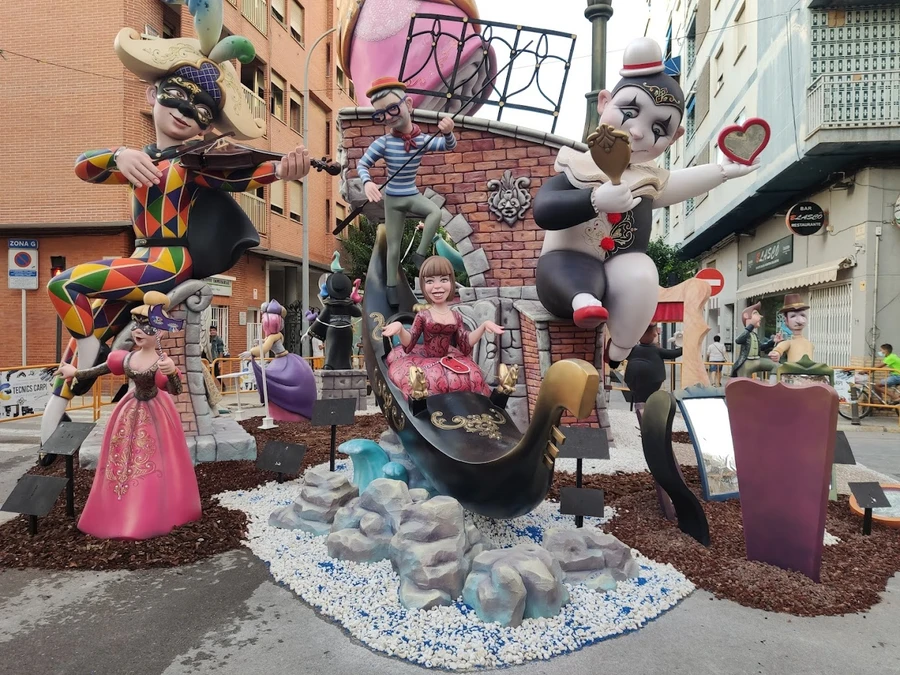
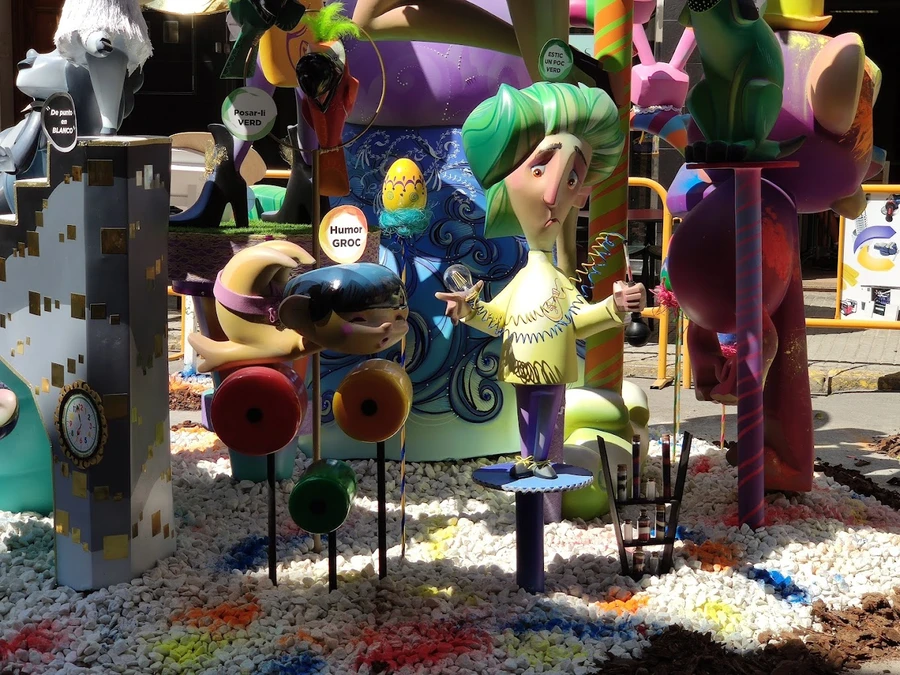
Imagine arriving in a city and suddenly seeing enormous colourful figures in the streets. Some are funny, others are serious, but all of them are impressive. That is what the Fallas are.
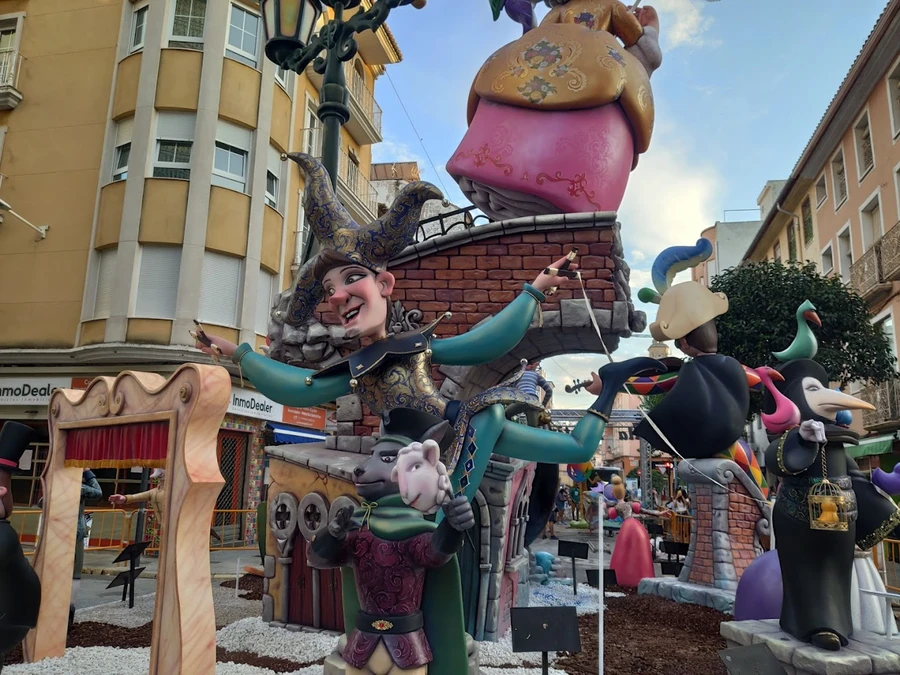
They are large figures or sculptures built by local artists every year. The most surprising part is that at the end of the festival, they are burned. Yes, really: they are set on fire in a huge celebration.
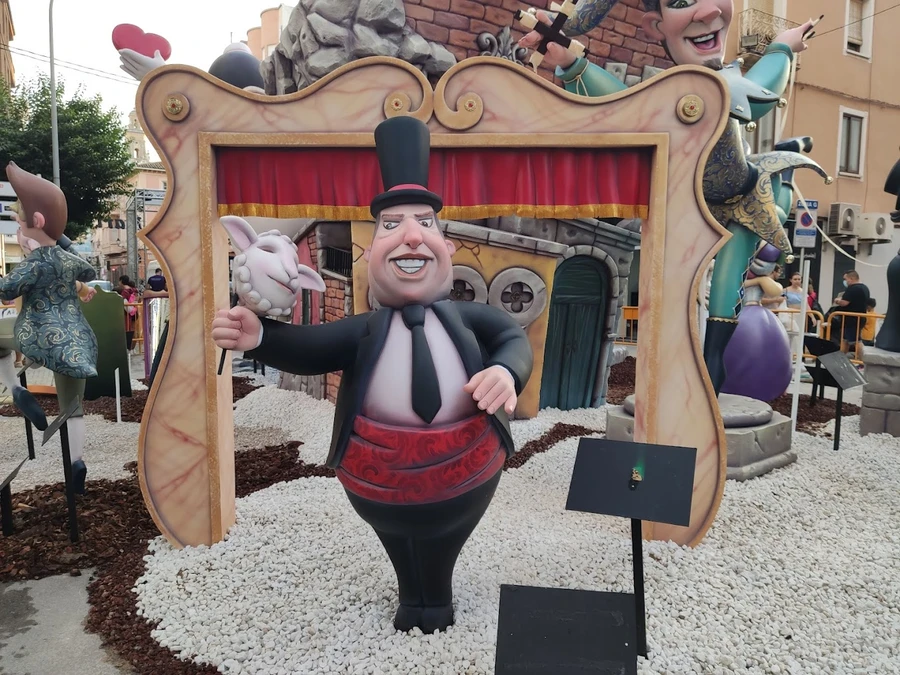
These figures, called “ninots”, usually represent things that happened during the year. Sometimes they make fun of politicians or celebrities; other times they tell stories about the city. It is like a giant 3D newspaper that tells the year’s news in a very playful way.
A Bit of History
The Fallas have an interesting history. A long time ago, Valencia’s carpenters cleaned their workshops at the end of winter. They burned old scraps in the street to celebrate the arrival of spring.
Over time, they began giving those scraps funny shapes before burning them.
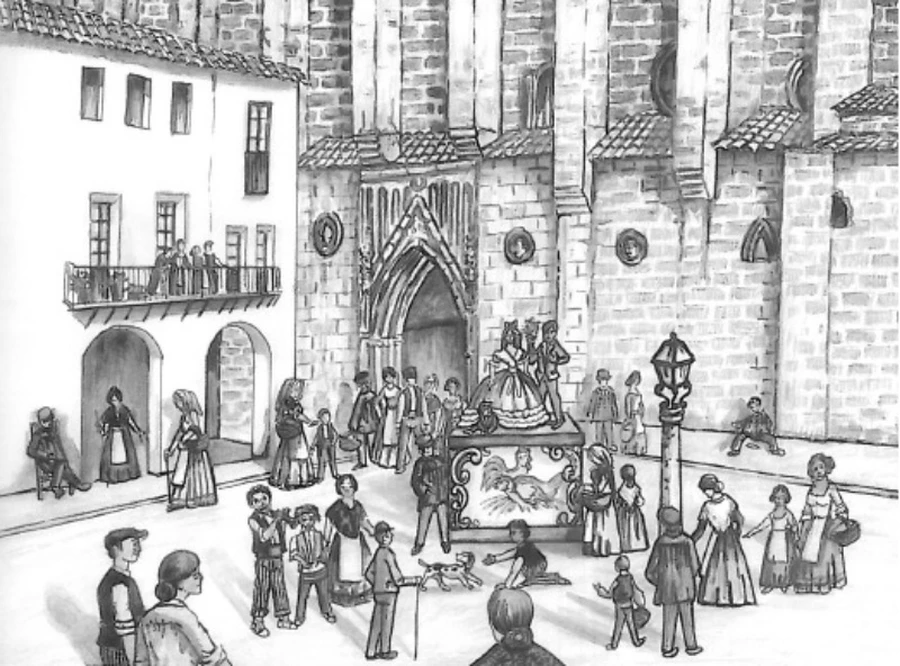
In Gandía, the tradition started a little later. The first remembered Falla dates back to 1876, but it was not until 1927 that people truly organised the Fallas as we know them today.
Since then, the festival has grown a lot and is now one of the most important events in the city.
When are the Fallas?
The Fallas of Gandía are held every year from 15 to 19 March. Those five days are the most important, but the festival actually begins much earlier. From February, you can already see the city getting ready.
What Can You See and Do During the Fallas?
-
La Plantà (15 March): this is the day when the Fallas are assembled. It is like watching a toy city appear out of nowhere. Artists and their teams work all day and all night to get the Fallas ready. If you get up early on the 16th, you can see them finished for the first time. It is a magical moment.
-
Mascletàs (16 to 19 March): every day at 14:00, go to the Renfe station area. There you will see, and above all hear, the “mascletà”. It is a fireworks show, but instead of lights in the sky, it is built around rhythmic explosions on the ground. The sound is so powerful you feel it in your whole body.
-
Visiting the Fallas: Gandía has 23 Fallas spread across the city. Each one is different and tells a different story, so take your time to see them.
-
The Flower Offering (18 March): one of the most beautiful moments. You will see many people in traditional dress carrying flowers to the Virgin. Together, they form a colourful floral mantle. It is beautiful and moving.
-
La Nit del Foc (17 March): this is the “Night of Fire”. A large fireworks display is held in Plaça del Tirant, filling the sky with light and colour. It is a magical moment you should not miss.
-
La Cremà (19 March): this is the grand finale. At night, all the Fallas are burned, first the smaller ones and then the larger ones. The last to burn is the one that won first prize. Watching these huge works of art turn to ash is impressive. It may seem sad, but it is actually a celebration, symbolising the end of winter and the beginning of spring.
Useful Tips for Enjoying the Fallas
-
Book your accommodation well in advance: Gandía fills up during Fallas. If you want a good place to stay, book several months ahead.
-
Wear comfortable clothes: you will walk a lot, so choose comfortable shoes and clothes that let you move easily.
-
Plan your meals: restaurants get very busy. If you want to eat somewhere specific, book a table. You can also try street food, which is very typical during Fallas.
-
Use public transport: driving around the city during Fallas can be difficult because many streets are closed. Public transport is usually the best option.
-
Join a guided tour: on 17 and 18 March there are guided tours called “Gandia en Falles”. They are a great way to understand the festival and the city better.
-
Try typical food: Fallas are a good time to taste Valencian dishes such as paella, fideuà or fritters. Do not miss them.
-
Learn a few words in Valencian: locals will appreciate it if you try a few words in their language, such as “Bon dia” (good morning) or “Gràcies” (thank you).
-
Be patient: there will be many people and sometimes you will need to wait. Take it calmly and enjoy the atmosphere.
What Else Can You Do in Gandía During the Fallas?
Although Fallas are the main event, Gandía has much more to offer:
-
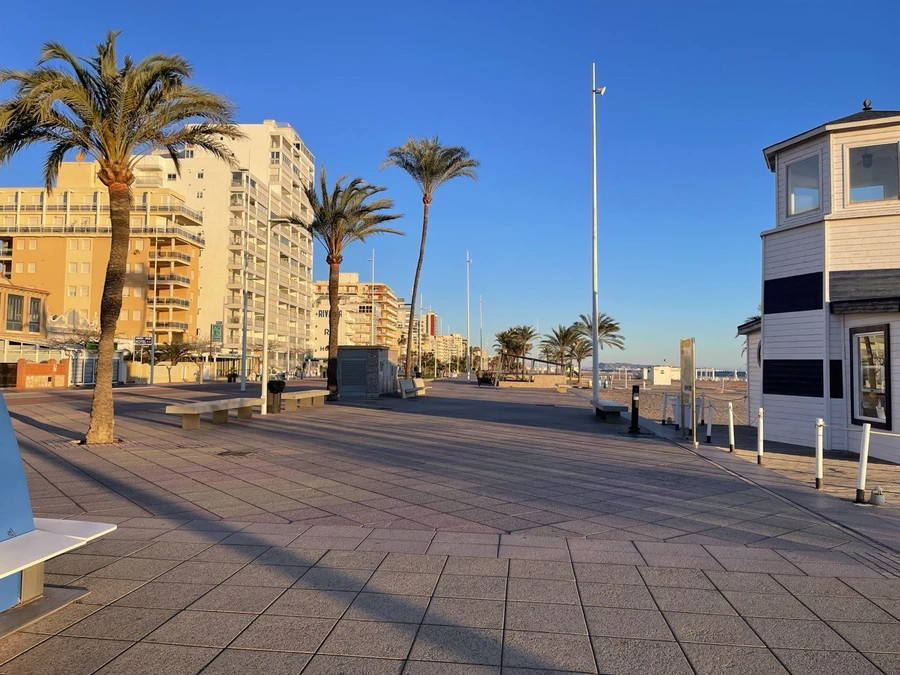
Visit the beach: Gandía has a beautiful beach. Although March can be a little cold for swimming, a walk along the shore is very pleasant.
-
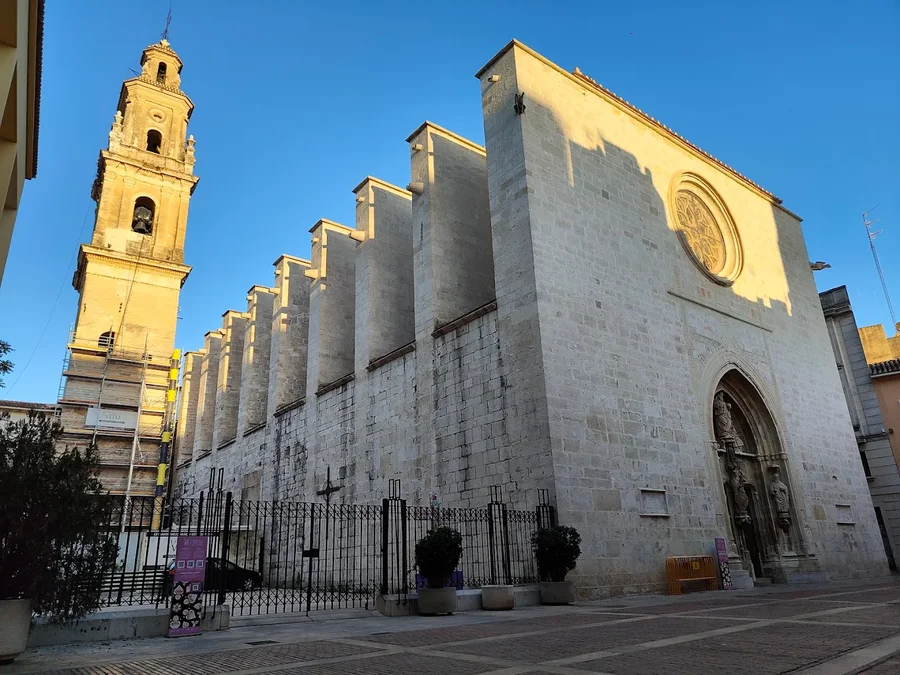
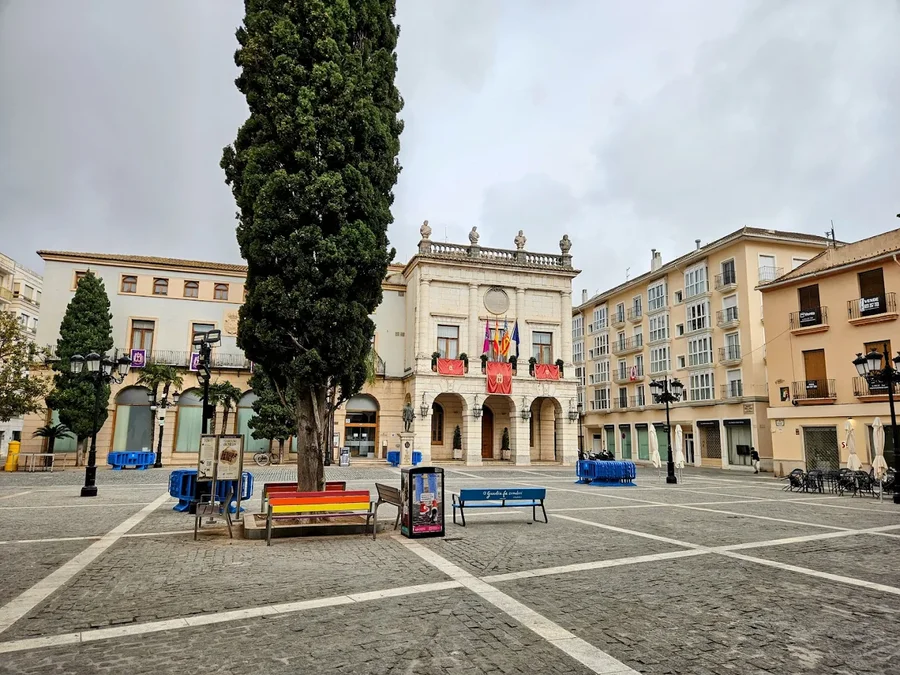
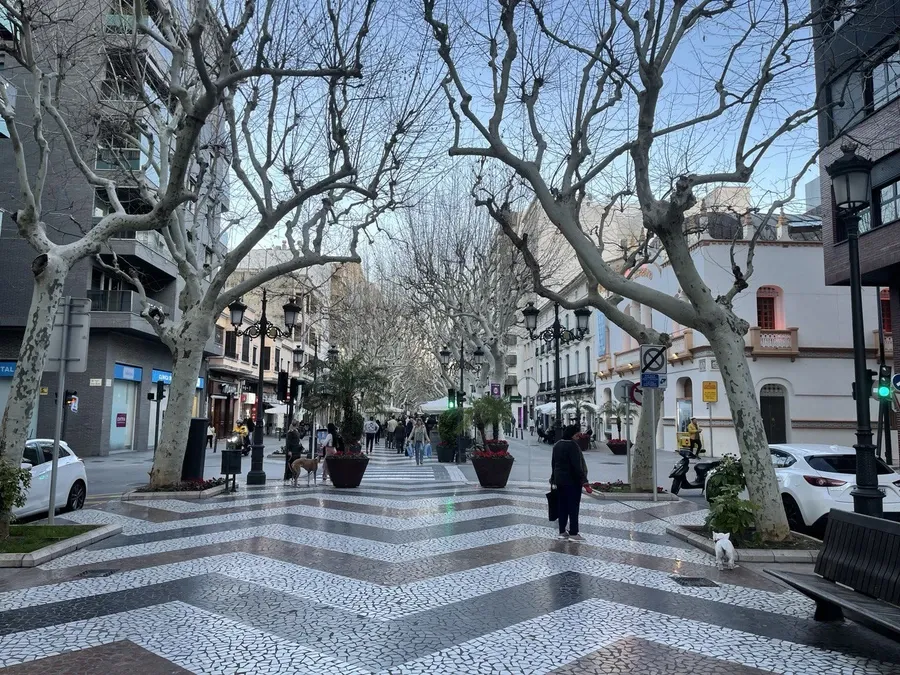
Explore the old town: Gandía’s historic centre is beautiful. You can visit the Ducal Palace, the Collegiate Church or simply walk through its streets.
-
Try chocolate with churros: it is a typical Fallas snack, and you will find stalls across the city.
-
Visit the Fallas Museum: here you can see the “ninots indultats”, the only figures saved from the flames each year.
The Fallas of Gandía are much more than a festival. They are an explosion of colour, sound, flavour and emotion. If it is your first time, you may feel a little overwhelmed at first because there is so much to see and do. Just let yourself be carried by the festive atmosphere and enjoy every moment.