
Gandia is a beautiful city on the Valencian coast. It has a bit of everything: lovely beaches, historic buildings and plenty of culture. In this post, I will show you what you can do and see in Gandia to make the most of your visit.
Ducal Palace of the Borgia
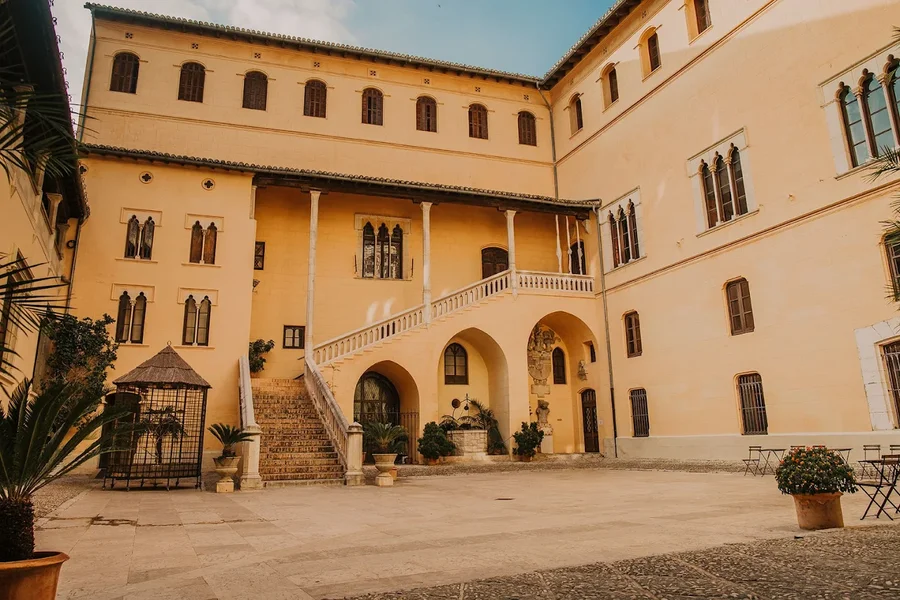
The Ducal Palace of the Borgia is Gandia’s most emblematic place, with more than 600 years of history.
This majestic building is not only a monument, but also a gateway to the past, allowing us to explore the era of the influential Borgia family, one of the most powerful in Europe.
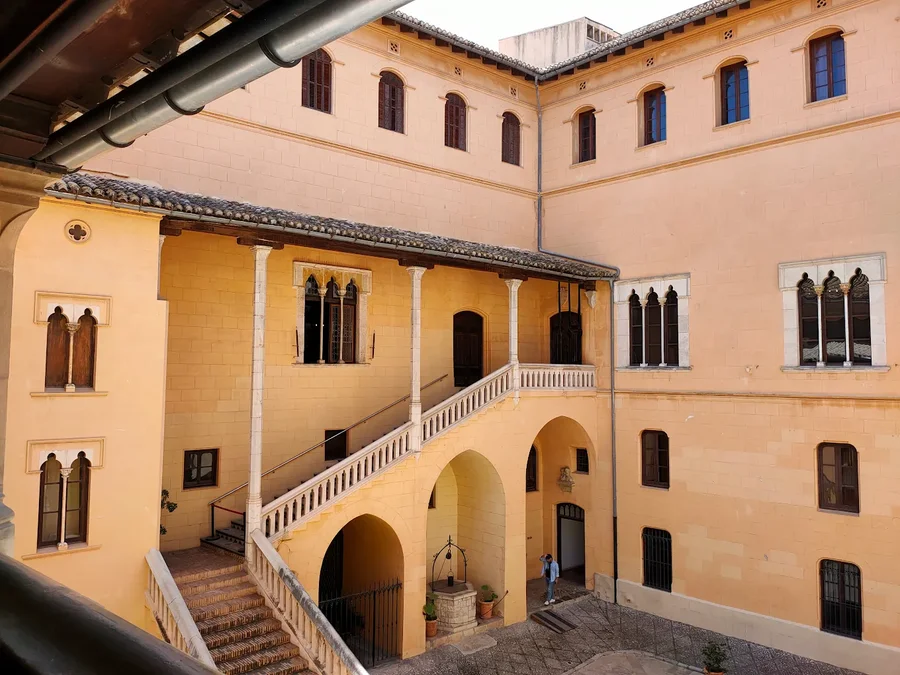
The palace was built in the 14th century, but it reached its greatest splendour under the Borgia family. Every room is full of history and every stone keeps its secrets. Imagine walking through the same corridors once used by popes, dukes and saints.
What You Can See Inside
-
Hall of Crowns: This majestic room takes you back to Gandia’s golden age, with coats of arms from the powerful families of the time and a carved wooden-beam ceiling that is a work of art.
-
Hall of Eagles: Decorated in Baroque style, this hall has impressive paintings depicting mythological and biblical scenes, along with golden eagle details.
-
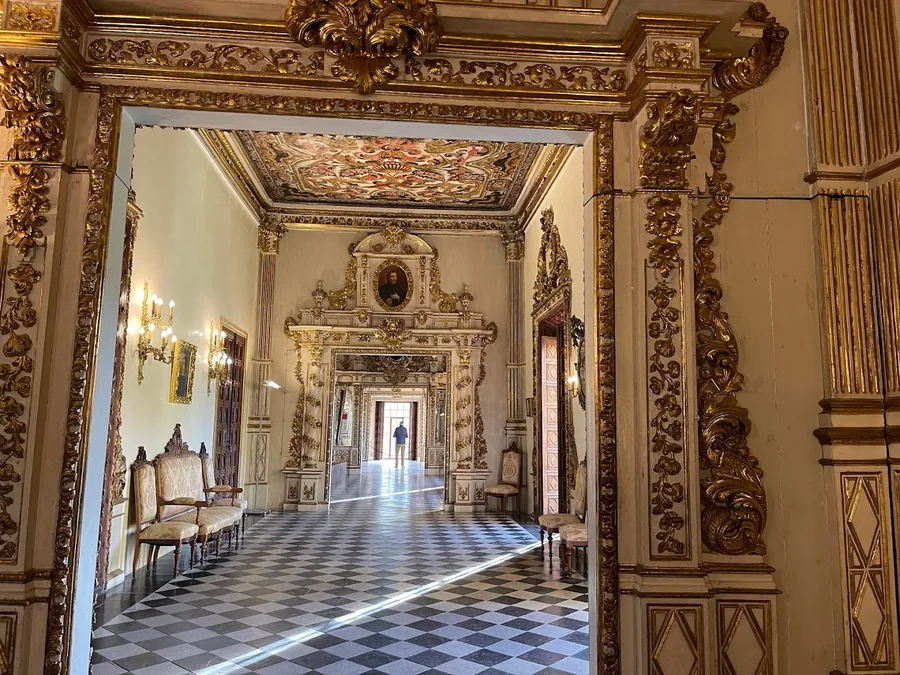
Golden Gallery: Built to celebrate the canonisation of Saint Francis Borgia, this gallery is a display of gold and Baroque art. Everything is decorated with intricate gilded designs.
-
Saint’s Oratory: An intimate space where Saint Francis Borgia used to pray, with frescoes showing scenes from his life.
Prices and Opening Hours
-
Adults: EUR8.
-
Students, retirees and groups: EUR7.
-
Children aged 6-17 and people with disabilities: EUR4.
-
Children under 6: Free.
Opening hours: They vary depending on the season. In general, it opens from Tuesday to Sunday, from 10:00 to 20:00 in summer and from 10:00 to 19:00 in winter.
Special tip: Do not miss the visit to the palace tower. The climb can be a little tiring, but the panoramic view of Gandia and its surroundings is worth it. On clear days, you can see all the way to the Mediterranean Sea.
Interesting fact: Saint Francis Borgia was born in this palace. He gave up his title as duke to join the Society of Jesus, and his story of spiritual transformation is told on the guided tours.
Gandia Fallas Museum
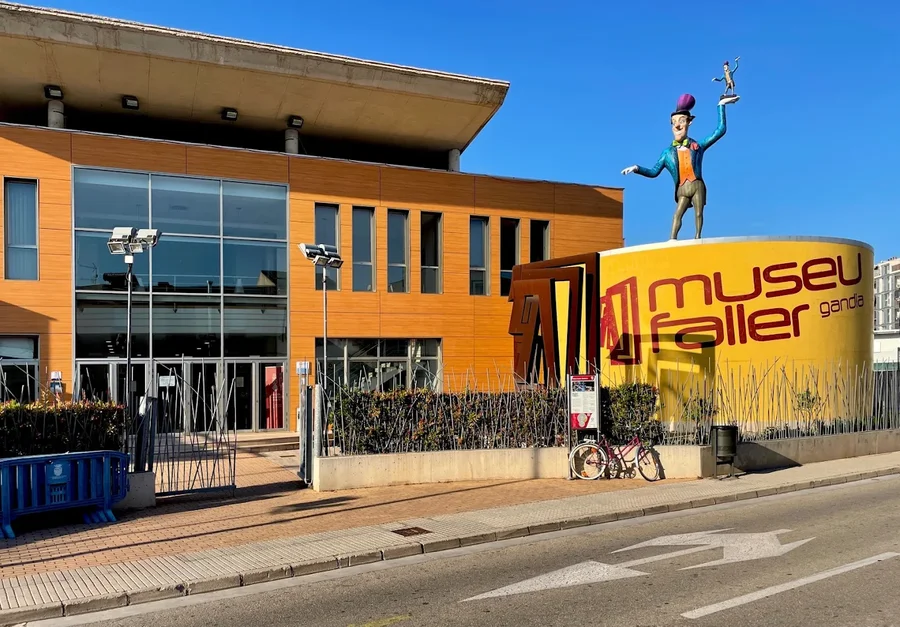
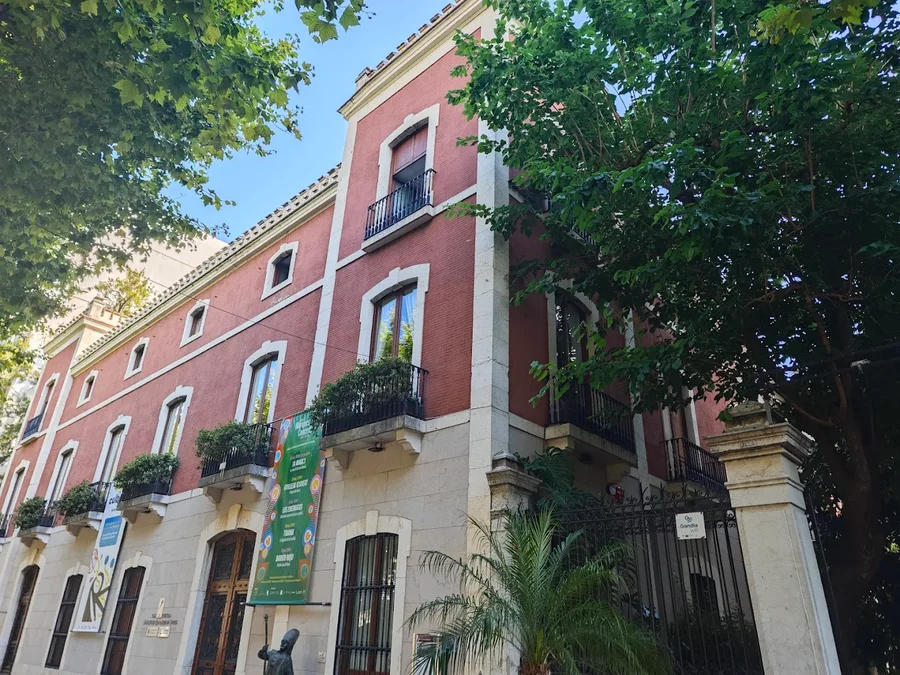
The Fallas are a cultural and artistic celebration recognised by UNESCO. The Gandia Fallas Museum lets you explore this fascinating tradition all year round.
What You Will Find
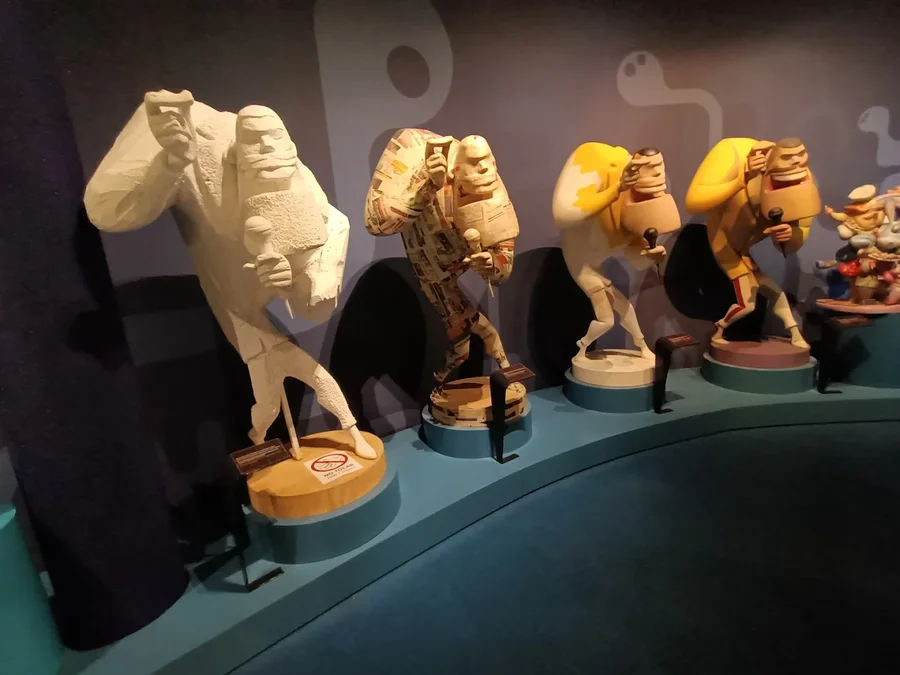
- Pardoned “ninots”: Cardboard and wood figures that are true works of art. Each year, one ninot is saved from being burned and is preserved in the museum. You will see everything from famous personalities to everyday scenes, all with a humorous and critical touch.
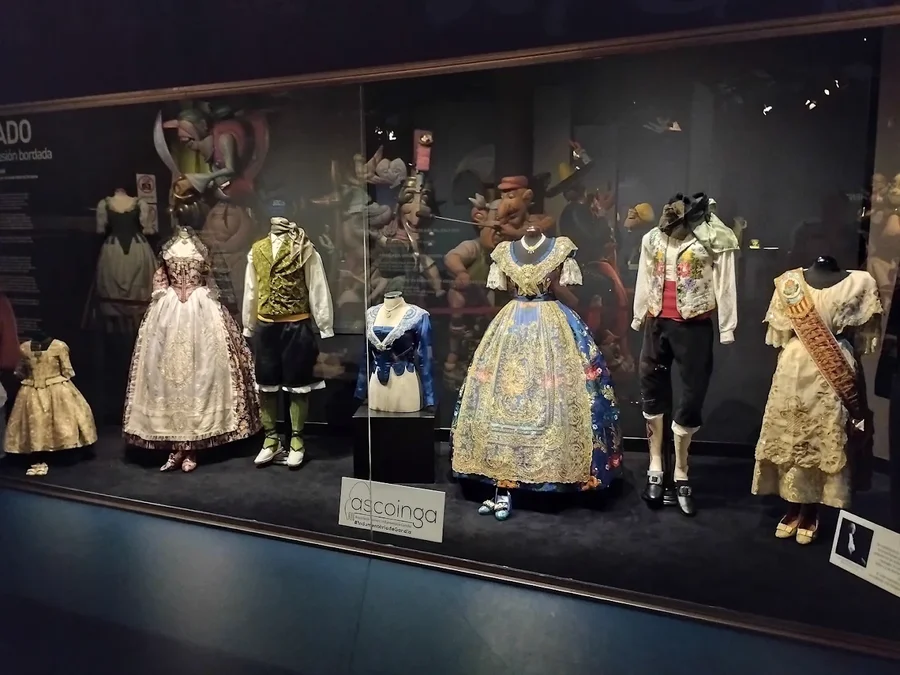
- Traditional clothing: The fallera and fallero outfits are true jewels. You can admire the craftsmanship in the embroidery, elaborate hairstyles and jewellery. Each outfit can take months to make and cost thousands of euros.
-
Historical exhibition: Photos, posters and old objects show how the Fallas evolved from a simple burning of old items into a spectacle of art and pyrotechnics.
-
Fallas artists’ workshop: A section of the museum where you can see artists at work. You will see the moulds, tools and techniques used to create these figures.
Best part: The museum offers interactive workshops where you can make your own miniature falla. It is a fun and educational experience for all ages.
Price
-
Adults: EUR5.
-
Children aged 3-14, students and retirees: EUR4.
-
Children under 3: Free.
Opening Hours
-
Tuesday to Saturday: 9:30 to 13:30 and 16:00 to 19:00.
-
Sundays and public holidays: Closed.

Tip: If you visit Gandia in March during the Fallas, do not miss the “planta”, when the fallas are installed in the streets, and the “crema”, when they are burned. It is a unique spectacle.
Gandia Town Hall
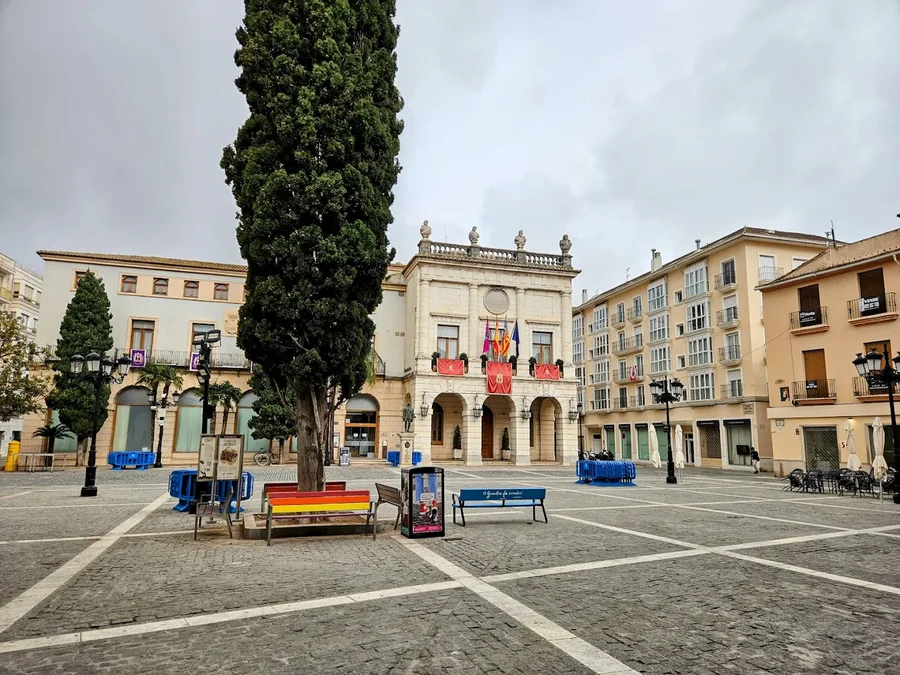
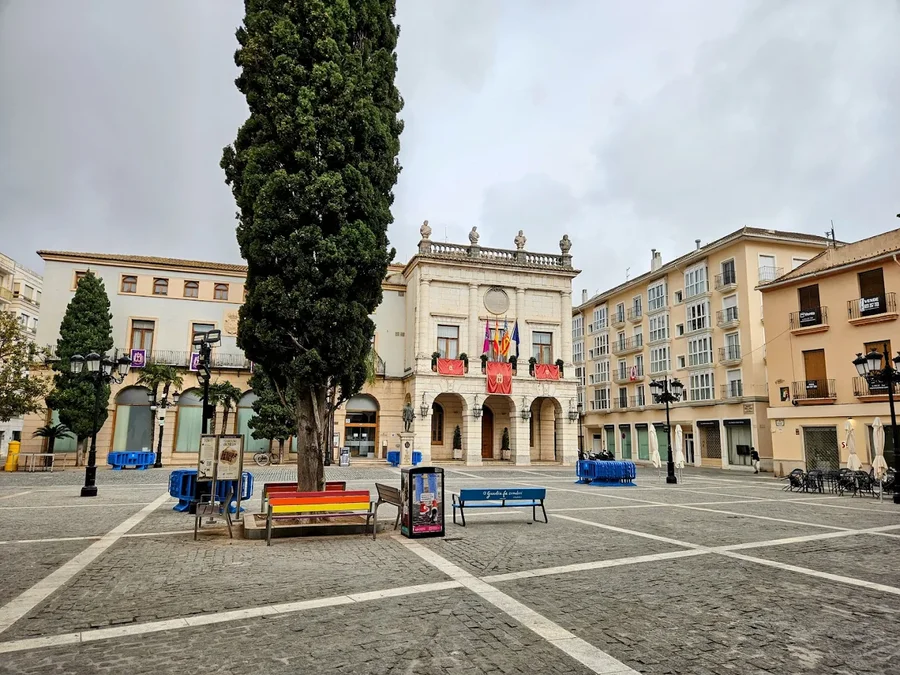
Gandia Town Hall is both the administrative centre and a building with a rich history. Located in Plaza Mayor, it is a landmark and a must-see.
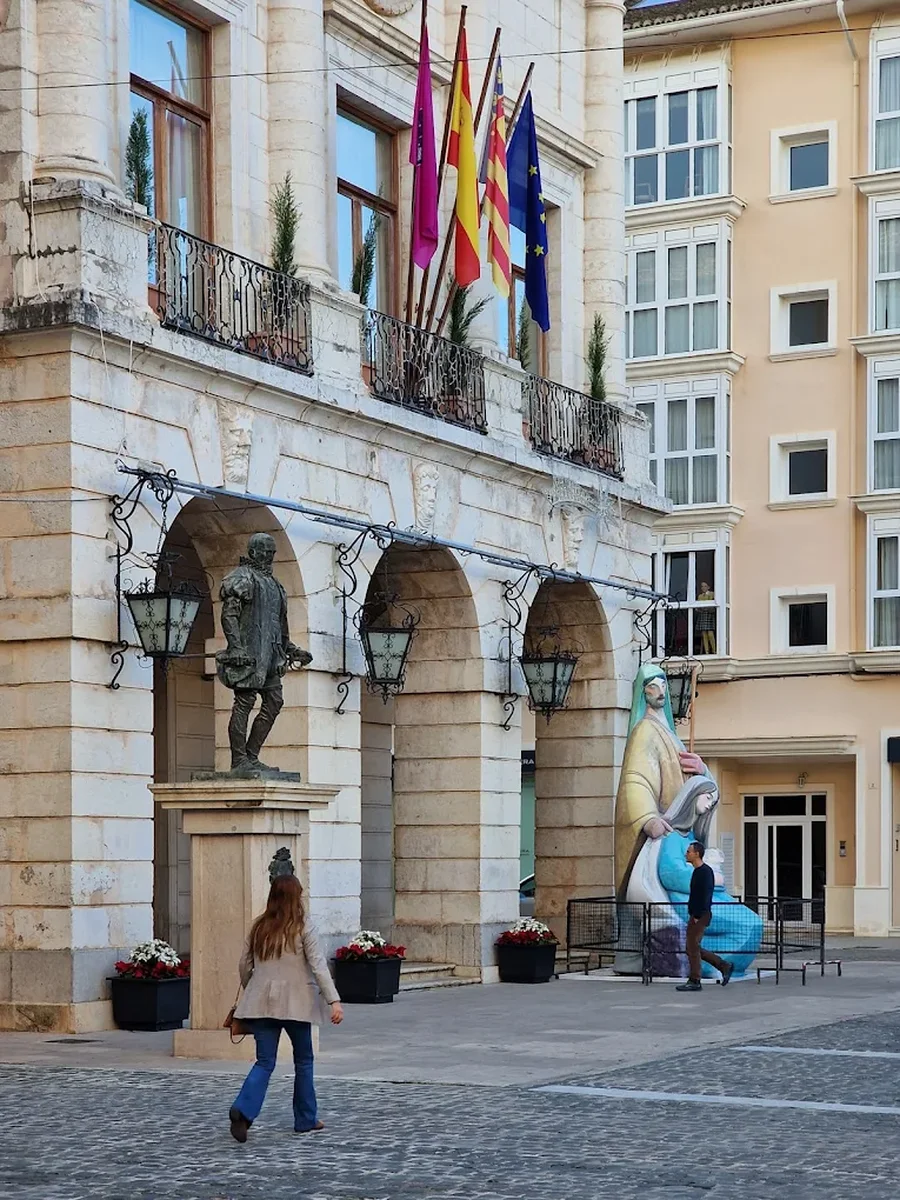
The current building dates from the 19th century, on the foundations of the old 14th-century Casa de la Villa. It has witnessed important historical events and remains the heart of civic life. This is what you can see:
-
Facade: Neoclassical in style, with columns, balconies and the city’s coat of arms at the top.
-
Plenary hall: Decorated with paintings of important moments in Gandia’s history. If it is open to the public, it is worth visiting.
-
Main staircase: Majestic and leading to the upper floors, with portraits of notable figures from the city.
Visiting Hours
The building is open to the public during office hours, usually Monday to Friday from 9:00 to 14:00.
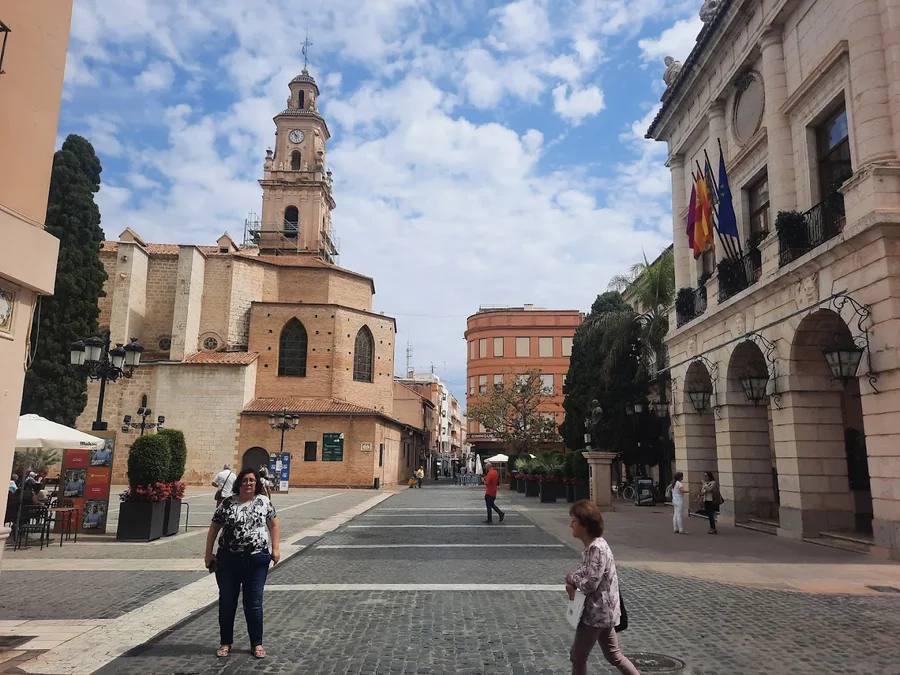
Tip: Plaza Mayor is perfect for sitting on a terrace, having a coffee and watching local life. It is Gandia’s social heart.
Plaza del Rey Jaume (Placa Rei En Jaume)
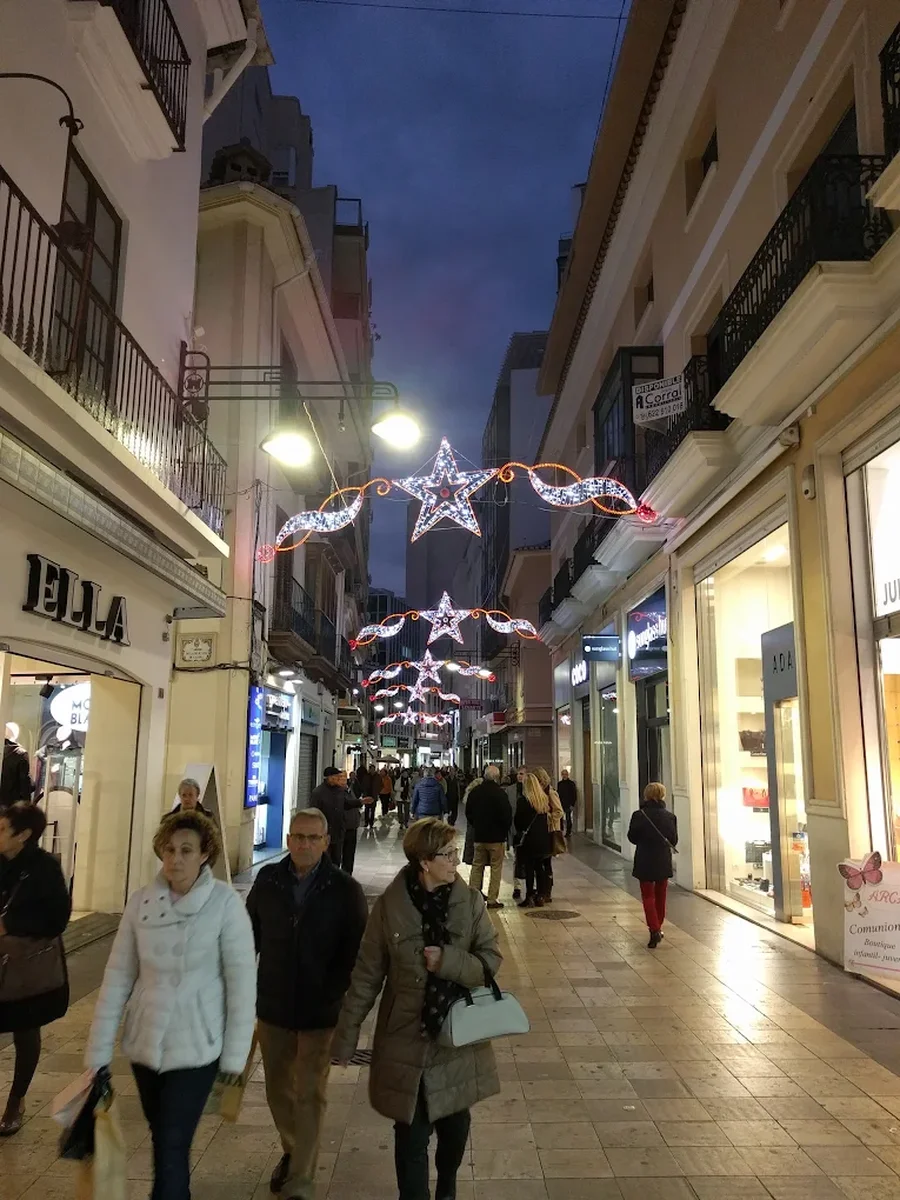
Plaza del Rey Jaume is the heart of Gandia, where history mixes with everyday life. It is an ideal place to feel the city’s real atmosphere.
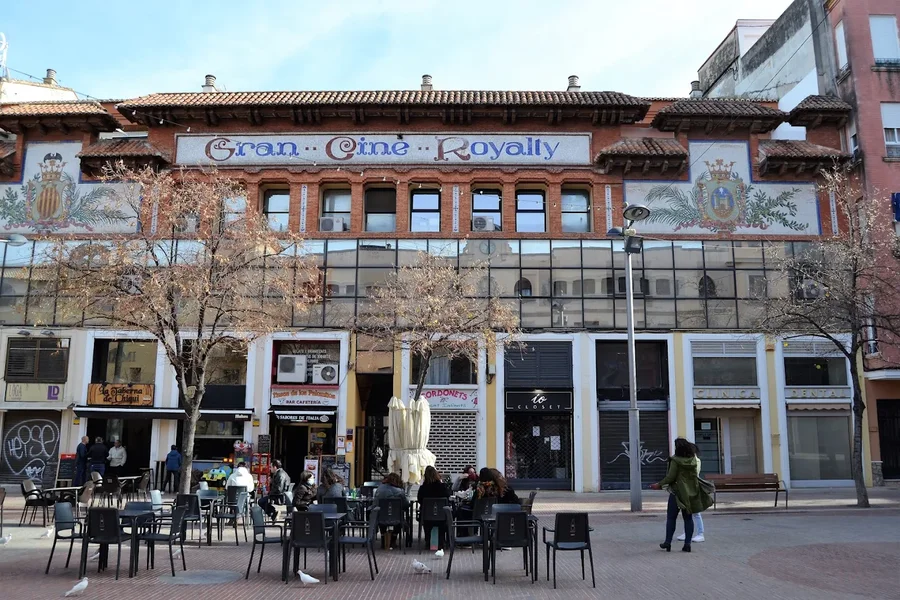
The square is named after King James I of Aragon, “the Conqueror”, who played a crucial role in the history of Gandia and the Valencian region. It has witnessed medieval markets and royal proclamations.
What You Can Do and See
-
Rest on the terraces: Surrounded by cafes and restaurants, it is ideal for sitting down, having a coffee or horchata, and watching local life.
-
Cultural events: The square often hosts cultural events, concerts and markets.
Tip: Visit the square both during the day and at night. By day, you can better appreciate the architectural details and sculptures, while at night the lighting creates a magical atmosphere.
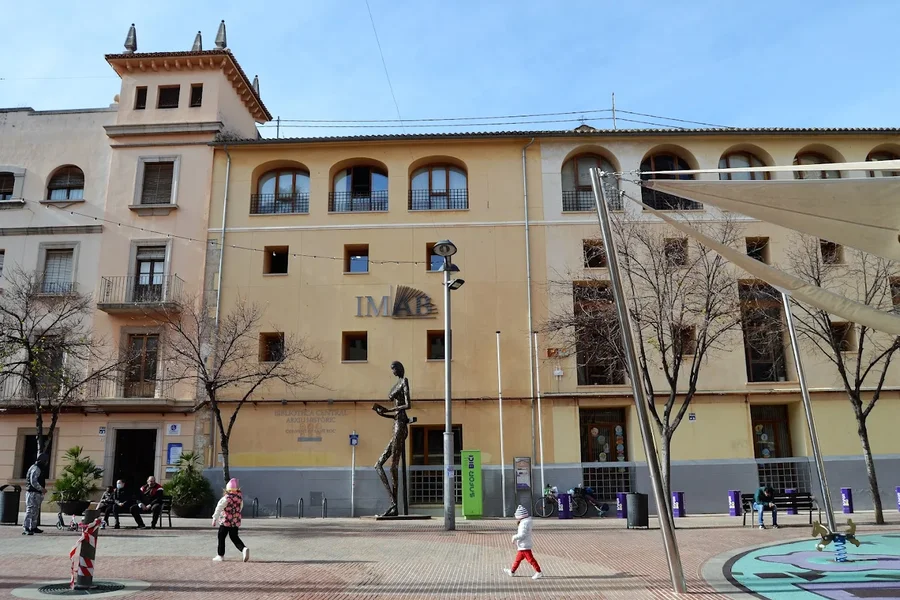
Teatro Serrano
Teatro Serrano is a symbol of Gandia’s love of the arts and an impressive example of early 20th-century architecture.
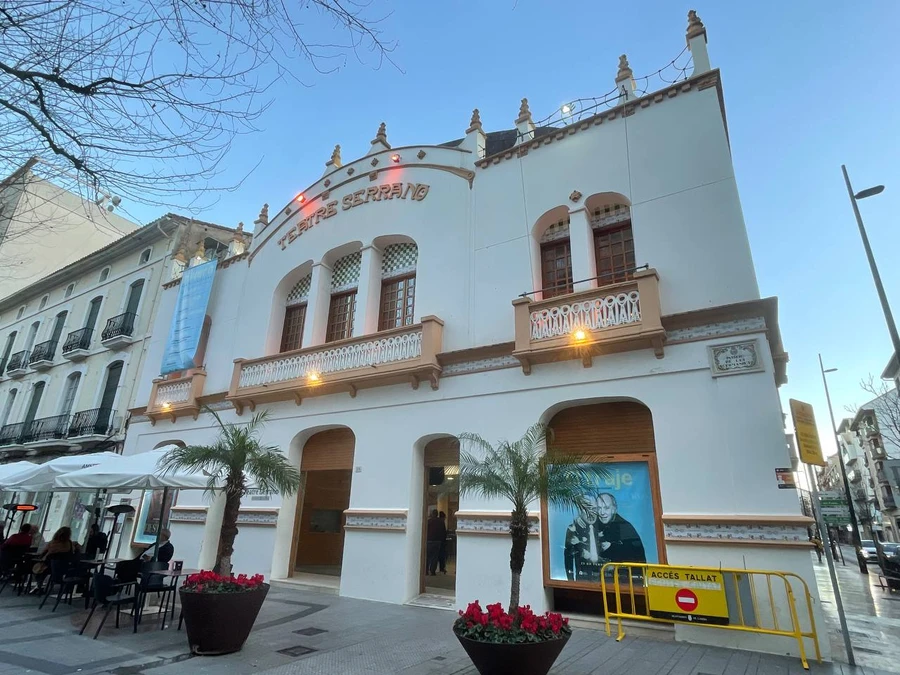
Opened in 1841, Teatro Serrano has been the centre of Gandia’s cultural life for more than 180 years. It has survived wars and social changes, remaining a cultural pillar.
The current building, from 1901, is an architectural gem. Its eclectic facade with modernist influences is a visual delight, with decorative details, arched windows and an elegant entrance.
What You Can See and Do
-
Attend a show: It offers a varied programme with theatre plays, concerts, dance and comedy shows.
-
Guided visit: Guided tours are sometimes offered to explore parts of the theatre normally closed to the public, such as dressing rooms and backstage areas.
-
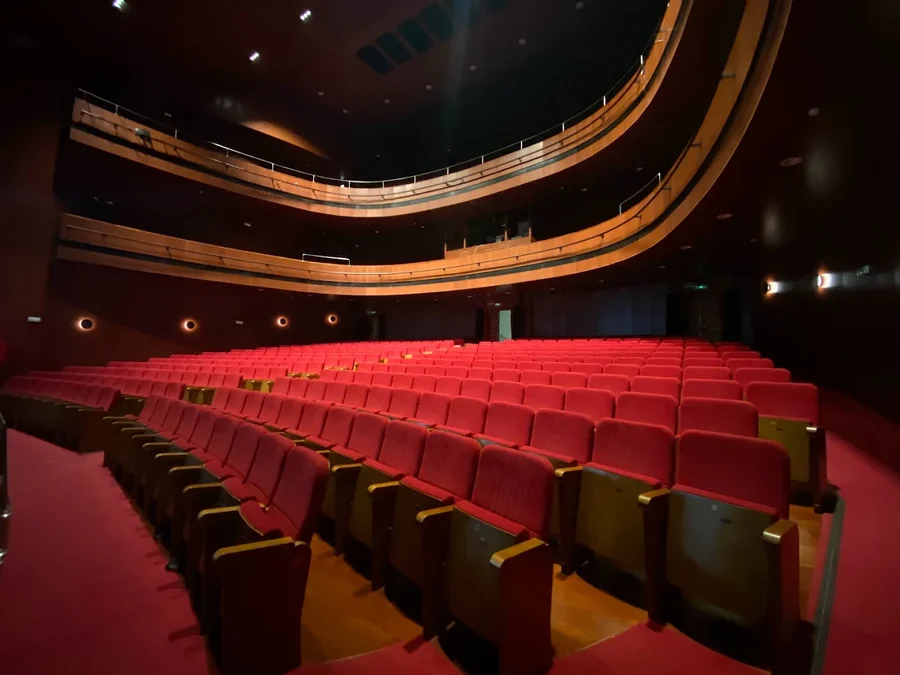
Admire the interior: If it is open, it is worth seeing the foyer and main hall, with plaster decorations, chandeliers and red velvet seats.
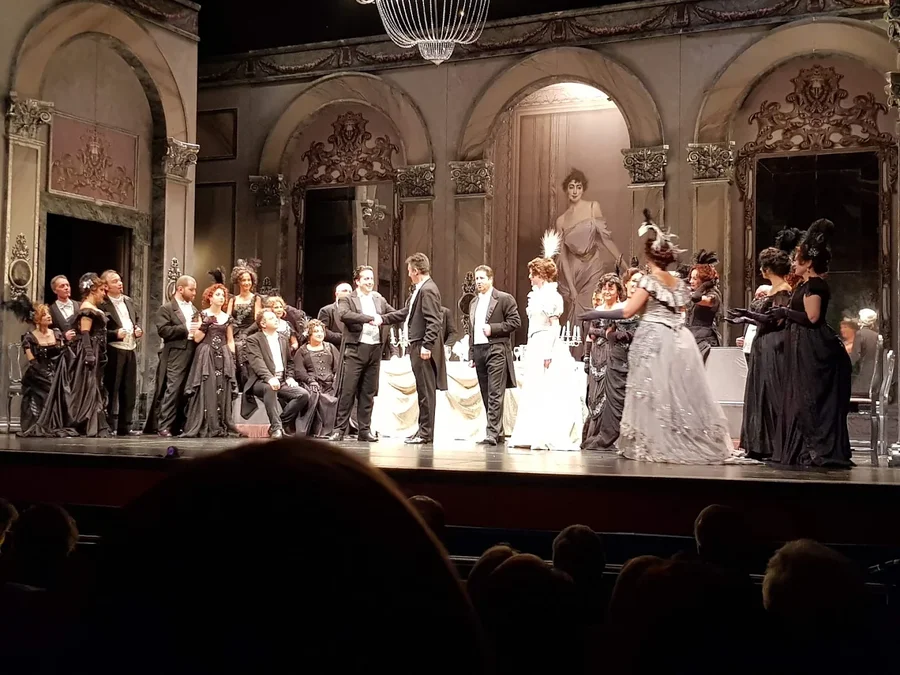
Capacity and Features
-
The theatre can hold more than 600 spectators.
-
It has exceptional acoustics, ideal for concerts and theatre plays.
-
The stage is one of the largest in the Valencian Community, suitable for major productions.
Tip: If you plan to attend a show, buy tickets in advance, especially in high season. You can do it at the box office or on the official website.
Teatro Serrano is located on Paseo de las Germanias, in the centre of Gandia. Its location makes it easy to reach and it is a reference point in the city.
Former University of Gandia
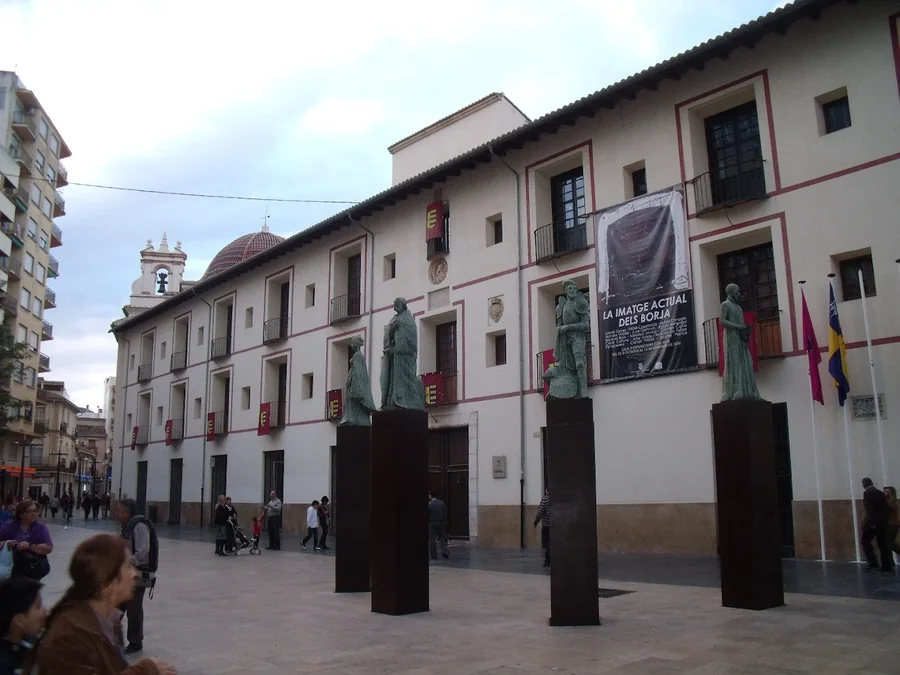
The Former University of Gandia is a place full of history and culture that takes us back to the city’s glory days.
It is not only an impressive example of Renaissance architecture, but also a symbol of Gandia’s educational and cultural legacy.
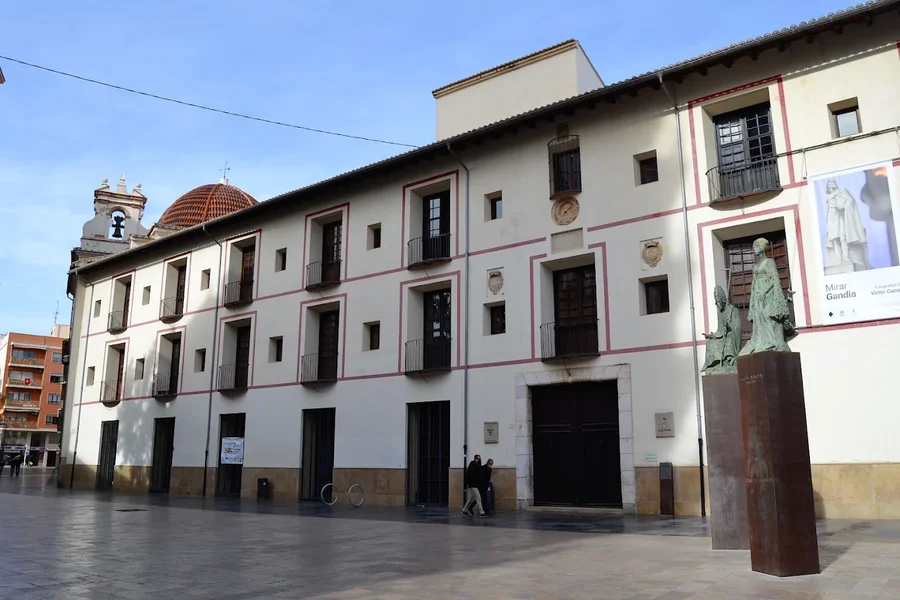
Founded in 1549 by Saint Francis Borgia, this university was one of the first Jesuit universities in the world. For more than 200 years, it was an important centre of learning, attracting students and scholars from across Europe.
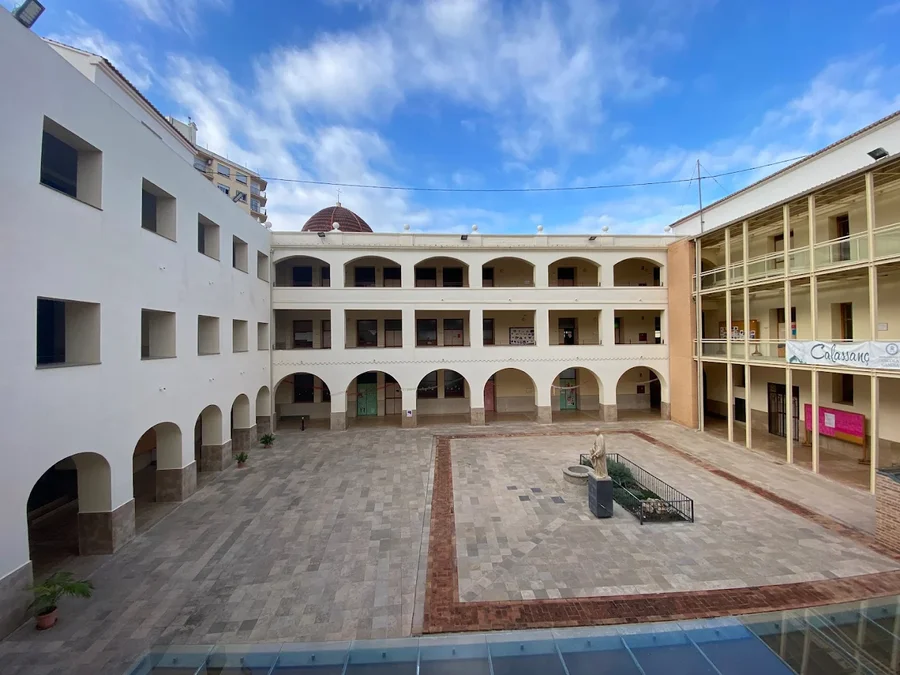
The building is a beautiful example of Spanish Renaissance architecture, with an elegant facade, spacious courtyards and historic classrooms.
What to See
-
Cloister: A central courtyard with arches and columns offering a quiet and beautiful place. It is a good spot to relax and admire the design.
-
Historic classrooms: Some of the old classrooms have been preserved and restored. You can imagine what it was like to study there centuries ago.
-
Chapel: A serene and beautiful space, decorated with frescoes and old altarpieces.
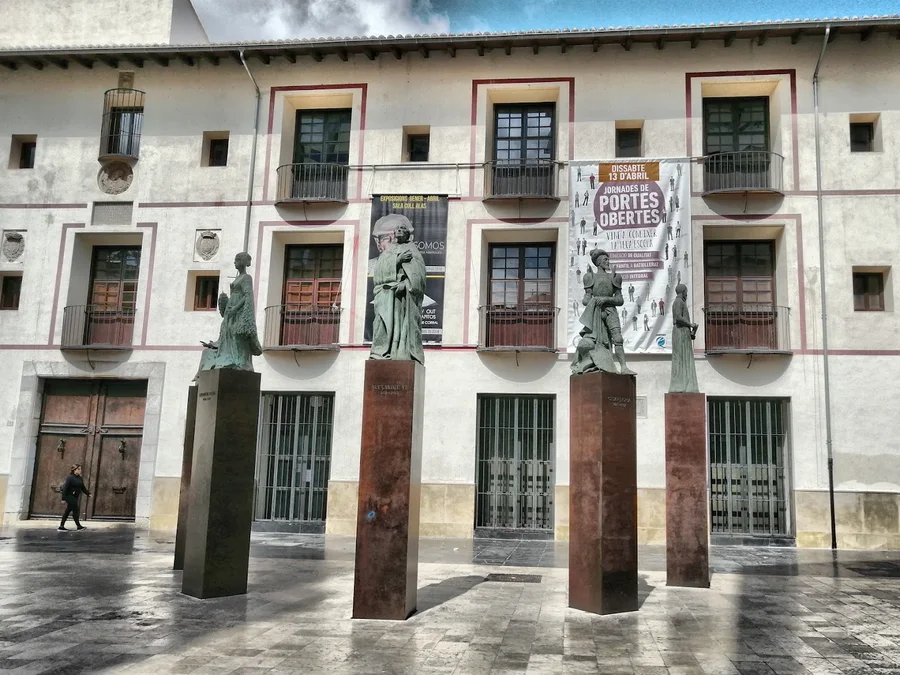
In the Former University square, you will find an impressive bronze sculptural group of the Borgia family. These statues represent five of the family’s most famous members:
-
Pope Callixtus III: The first Borgia pope.
-
Pope Alexander VI: One of the best-known popes of the family.
-
Cesare Borgia: Son of Alexander VI, a prominent politician and military figure.
-
Lucrezia Borgia: Daughter of Alexander VI, famous for her influence in her time.
-
Francis Borgia: The 4th Duke of Gandia and patron saint of the city.
These statues were placed in the square in 1998 and are a tribute to the importance of the Borgia family in Gandia’s history.
Interesting fact: The University of Gandia was famous for its advanced studies in astronomy. From its observatory, students and professors studied the night sky.
Convent of Santa Clara
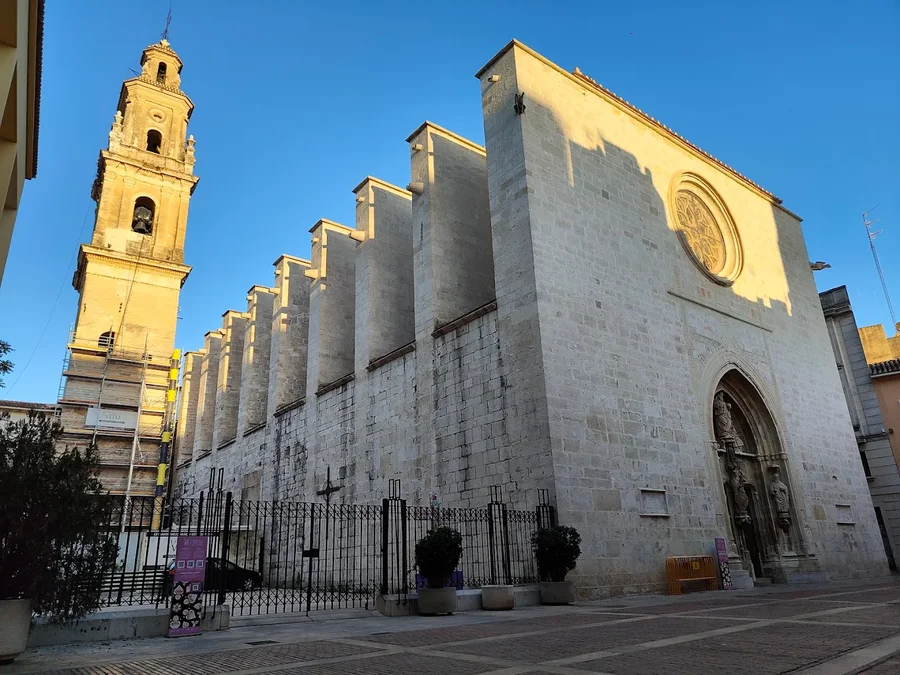
The Convent of Santa Clara is one of the oldest and most important religious buildings in Gandia. Its history and architecture offer a fascinating look at the city’s past.
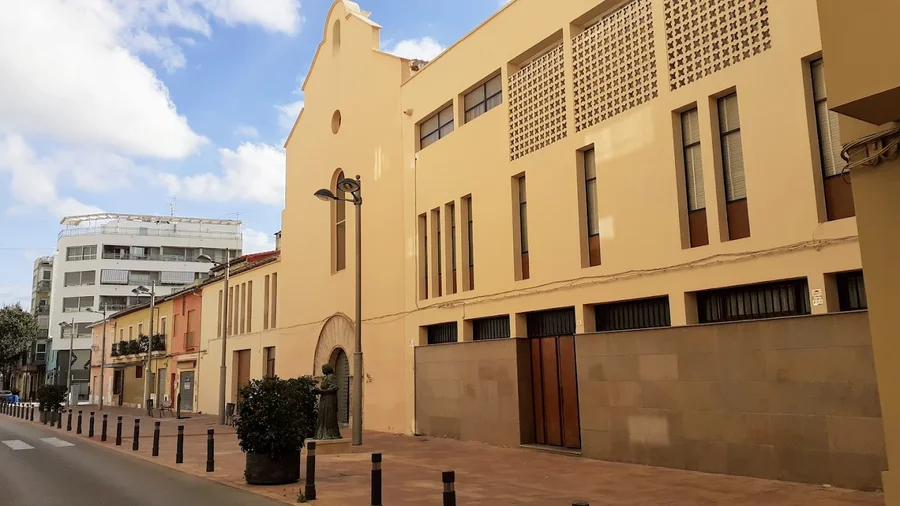
Founded in the 13th century, the convent has experienced many events over the years: wars, social changes and more, while always preserving its spiritual essence.
The convent combines different architectural styles, from the original Gothic to Renaissance and Baroque additions, showing its evolution over time.
What to See
-
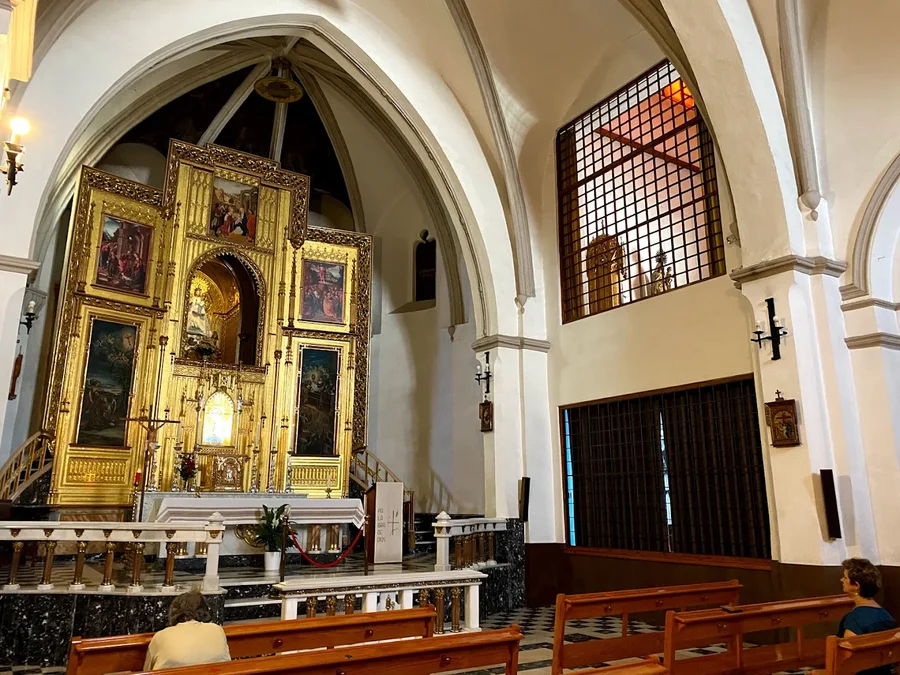
Church: Although simple, the convent church has a quiet beauty. Notice the Gothic details and Baroque altarpieces.
-
Cloister: If it is open to the public, the cloister is a peaceful place ideal for reflection.
-
Sweet shop: Do not leave without visiting the shop where the nuns sell their famous handmade sweets. The pastries and biscuits are delicious and made with very old recipes.
Interesting fact: The convent has a special connection with the Borgia family. It is said that Saint Clare of Assisi appeared to a member of the family, strengthening the relationship between the convent and the Borgia.
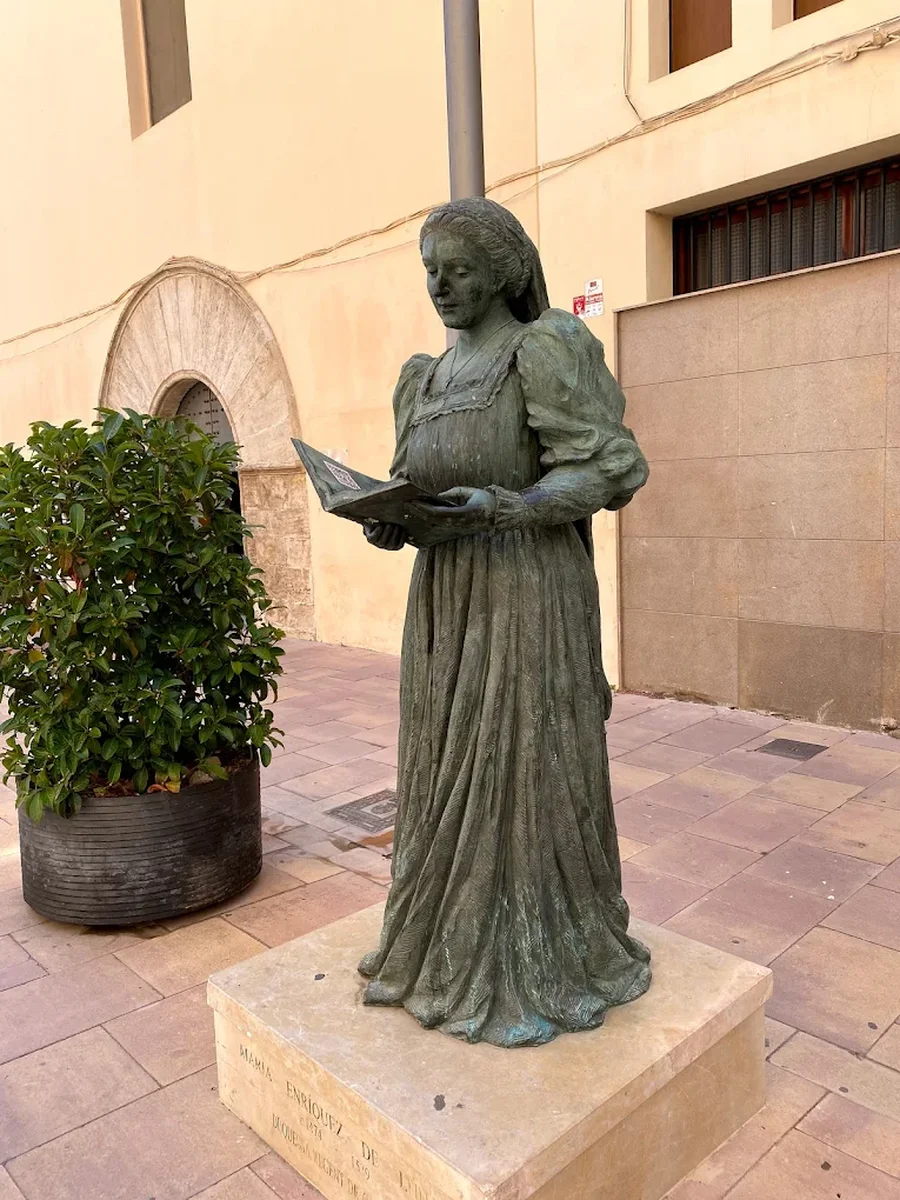
Opening hours: The convent is still a cloistered place, so visits are limited. The church is usually open for worship, and the sweet shop has its own hours. It is best to check opening times at the tourist office.
Archaeological Museum (MAGA)
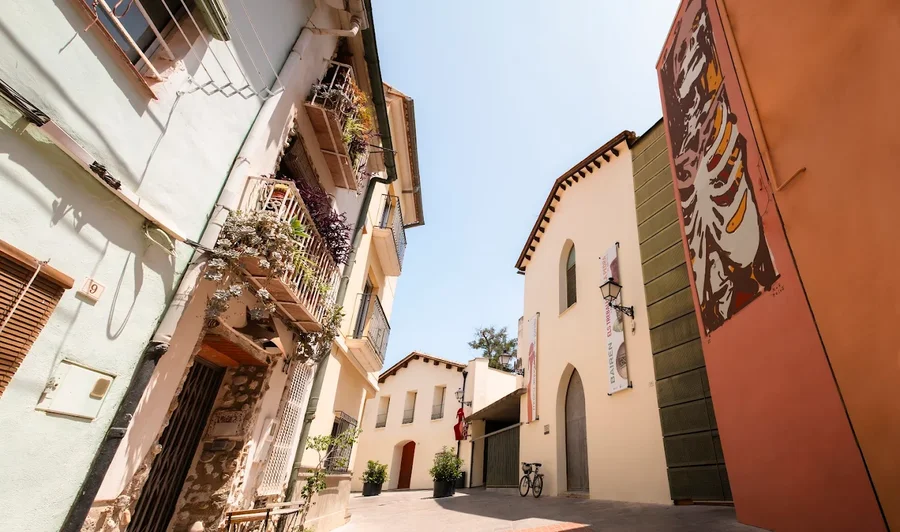
The Archaeological Museum of Gandia (MAGA) offers a journey into the past, allowing you to discover the rich history of the region from prehistory to the medieval period.
The museum is located in the former San Marcos Hospital, a 14th-century building. This makes the visit even more special, as it combines history and archaeology.
What You Can See
-
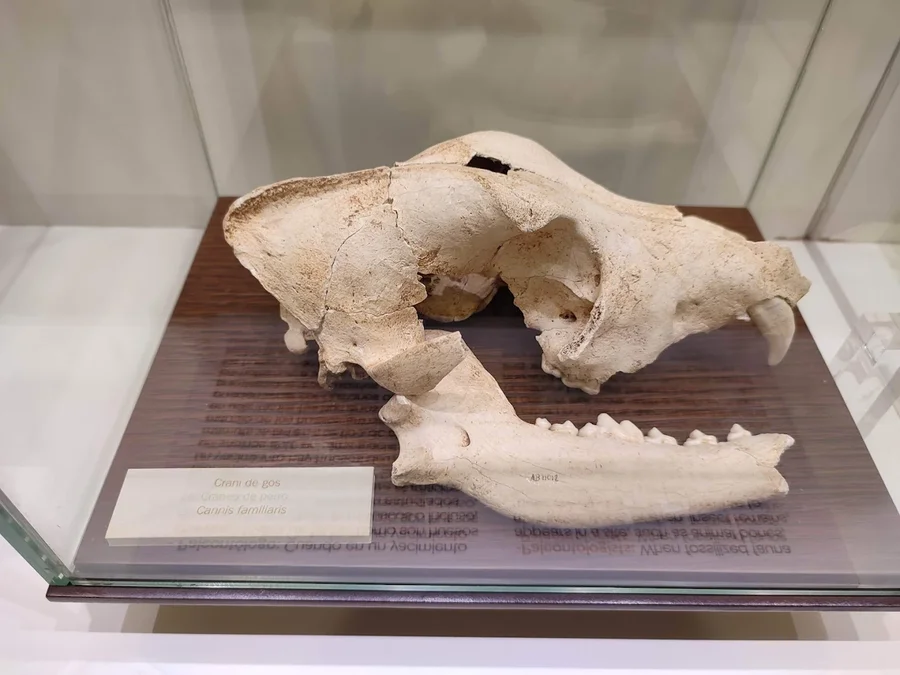
Prehistory room: Here you will find stone tools, ceramics and other objects from the Palaeolithic and Neolithic periods. There is also a recreation of a prehistoric burial.
-
Iberian and Roman section: Learn about the lives of Iberians and Romans in this region. There are ceramics, coins and everyday objects.
-
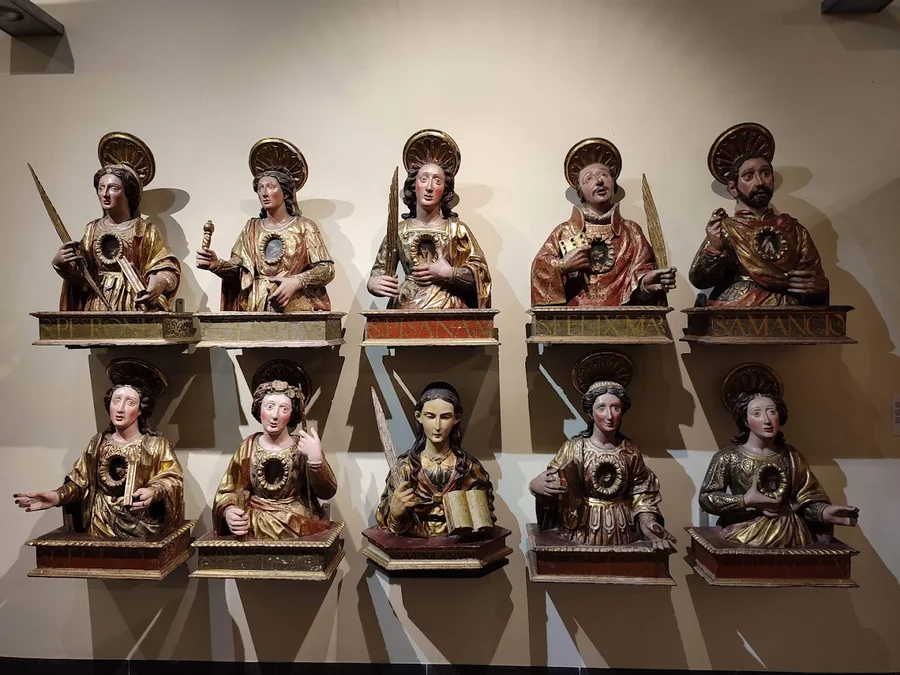
Medieval area: Focused on the Islamic and Christian medieval periods, with architectural remains, glazed ceramics and other artefacts showing life in medieval Gandia.
-
Temporary exhibitions: The museum also hosts temporary exhibitions exploring specific themes in local archaeology.
Special Activities
MAGA offers educational workshops and guided tours, especially popular with school groups and families.
Opening Hours
-
Tuesday to Saturday: 9:00 to 19:00.
-
Sundays: 10:00 to 14:00.
-
Mondays: Closed.
Price
Admission is usually free, but it is best to confirm on the official website or at the museum entrance.
Tip: Do not miss the model showing what Gandia looked like in the medieval period. It is an excellent way to see how the city has changed over the centuries.
Civil War Shelters
Explore an exciting and little-known part of Gandia’s history with a visit to the air-raid shelters.
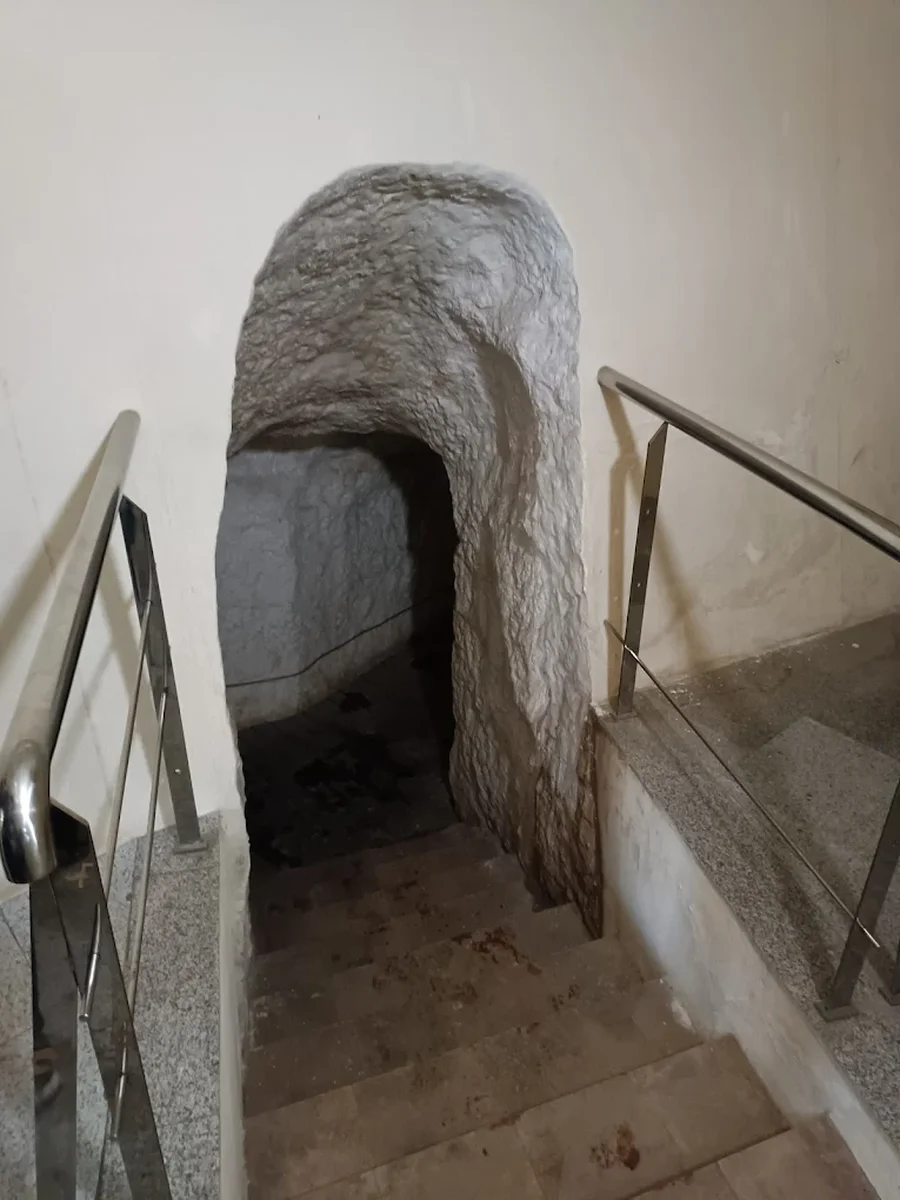
These underground tunnels not only tell the story of a challenging period, but also show the city’s resilience and ingenuity during the Spanish Civil War.
In 1938, during the Civil War, Gandia was targeted by bombings because of its strategic port. To protect citizens, 36 shelters with 51 entrances were built across the city.
These shelters offered safety during the 58 bombings that hit Gandia and the Grao. Today, you can visit two of these historic shelters and experience first-hand what seeking protection during those turbulent times was like.
Gandia Air-Raid Shelters
-
Peixateria shelter: This shelter, one of the largest and best preserved, has a fascinating history. Originally a municipal fish market, it became a market in the 1970s and 1980s, and today it is an administrative building. Although it is known as the Peixateria shelter, its proximity to the Town Hall has also given it the name Ajuntament shelter. You can still see the structures used to dry bananas when the building was a market, and its entrance forms part of Gandia’s old city wall.
-
Plaza del Prado shelter: Offers a similar experience, allowing you to explore another part of Gandia’s underground history.
The Visit Includes
-
Route: Walk through the tunnels and rooms, feeling the weight of history around you.
-
Information panels: Learn about life in Gandia during the war and how these shelters played a crucial role in protecting the population.
-
Sound effects: In some shelters, the sounds of a bombing are recreated to offer an authentic experience. If you prefer a calmer atmosphere, you can tell the guide.
Visits are guided and must be booked in advance. To book, you can call 667 697 448 or ask at the local tourist office.
Tip: Wear comfortable clothes and bring a light sweater, as the shelters can be cool even in summer.
Torreon del Pino (Torreo del Pi)
Immerse yourself in Gandia’s medieval past with a visit to the picturesque Torreon del Pino, one of the most charming remains of the city’s old wall.
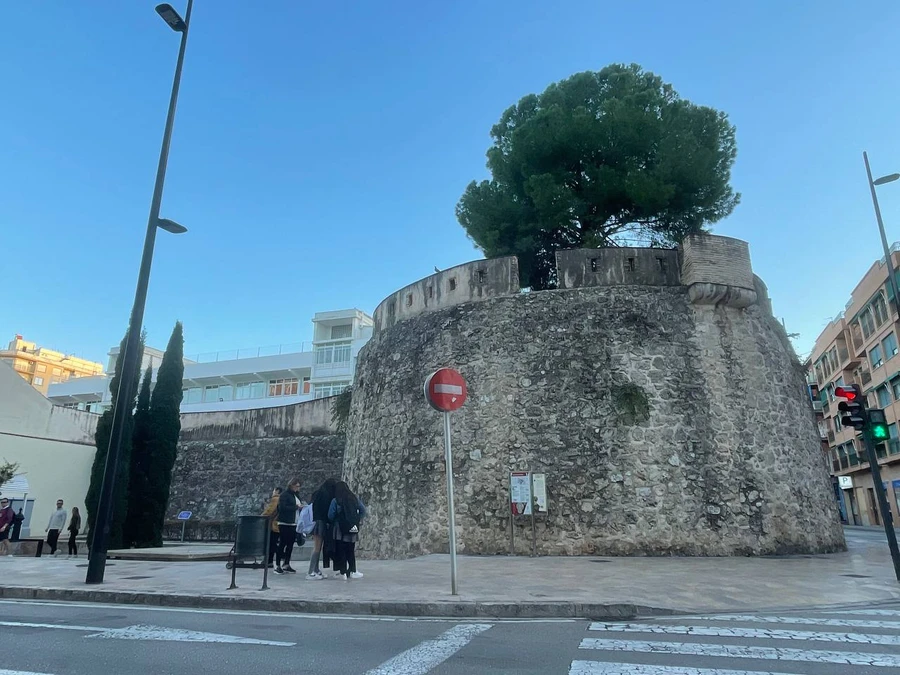
Built in the 14th century, Torreon del Pino is one of the few surviving structures from Gandia’s medieval wall. This tower has resisted the passage of time and today stands as a reminder of the city’s rich history.
What to See
-
The tower itself: Admire the solid circular structure of the tower, typical of medieval fortifications. Its robust design tells stories of defence and resistance.
-
The pine tree: A distinctive pine tree grows at the top of the tower, giving it its characteristic name. This tree is a symbol of how nature and history intertwine in Gandia, adding a unique touch to the monument.
-
The surroundings: Located in a charming area of the old town, the tower offers the perfect setting for a walk and for discovering hidden corners of Gandia.
Although the pine tree looks as if it has been there for centuries, it was actually planted in the 20th century. Even so, it has become such a beloved symbol that it is now an integral part of the monument, capturing the imagination of locals and visitors alike.
Torreon del Pino is located on Calle San Rafael, right in Gandia’s historic centre.
Gandia Beaches
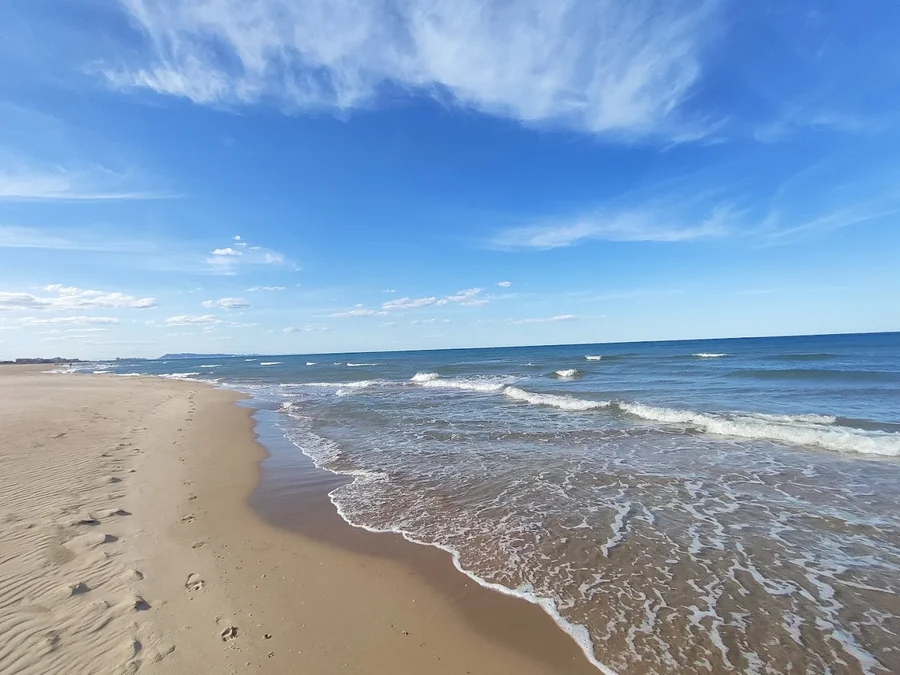
Finally, you cannot miss the beaches. Gandia’s beaches are famous for their beauty and quality, and they are one of the city’s main attractions.
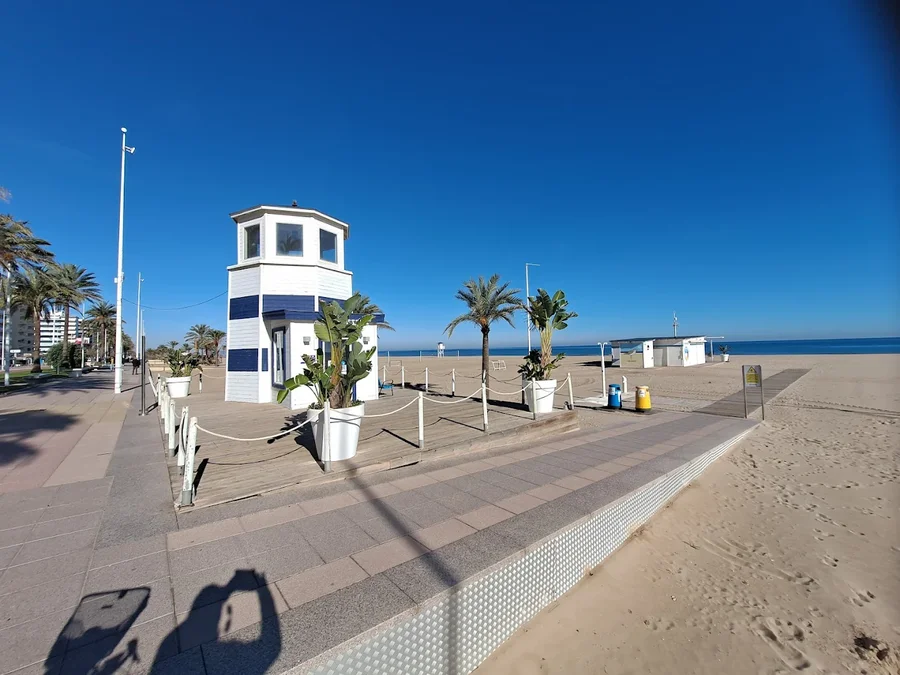
Playa Norte
This is Gandia’s main beach, more than 3 km long.
-
Sand: Fine and golden, perfect for sunbathing or building sandcastles.
-
Services: It has showers, toilets, hammock and umbrella rental, and lifeguard surveillance.
-
Activities: You can practise water sports such as windsurfing, sailing or paddleboarding.
Playa de l’Ahuir
For those looking for a more natural and peaceful atmosphere.
-
Features: It is an unspoilt beach, with no buildings nearby.
-
Ideal for: Walks along the shore, birdwatching and naturism in some areas.
Playa de Venecia
A smaller and more family-friendly beach.
-
Location: Near the marina.
-
Atmosphere: Quieter than Playa Norte, ideal for families with young children.
Tip: In summer, the beaches fill up quickly. Arrive early if you want a good spot, especially in July and August.
Beach Activities
-
Water sports: Equipment rental for windsurfing, paddleboarding, kayaking and more.
-
Beach volleyball: Nets are installed in several areas of Playa Norte.
-
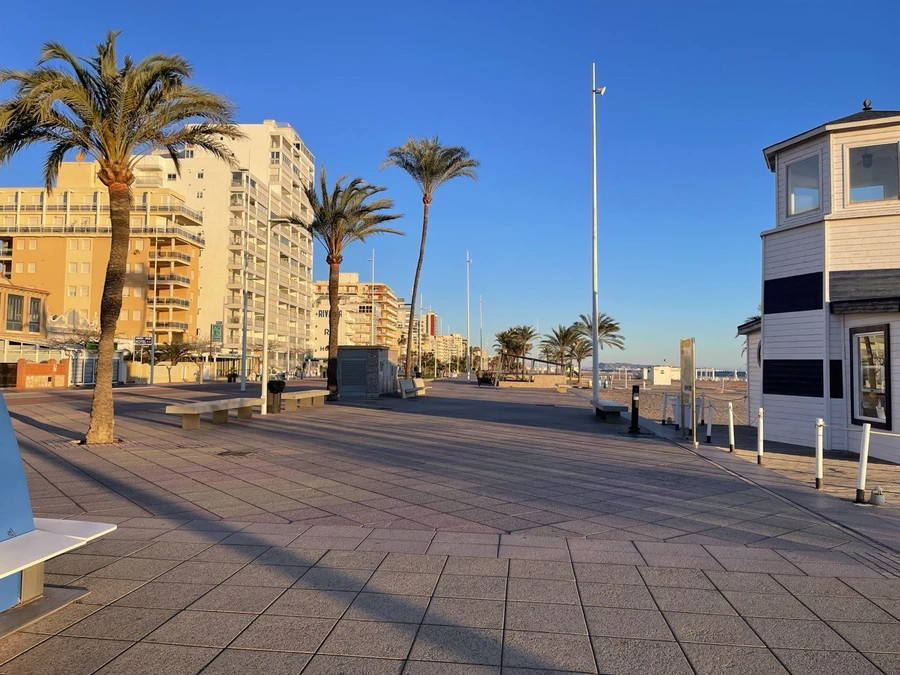
Seafront promenade: Ideal for walking, running or cycling.
Interesting fact: Playa Norte in Gandia has received the Blue Flag, a certificate for environmental quality and services, for more than 30 consecutive years.
With this guide, you have everything you need to explore Gandia in depth. From its rich history to its beautiful beaches, Gandia offers a complete experience for every kind of traveller.