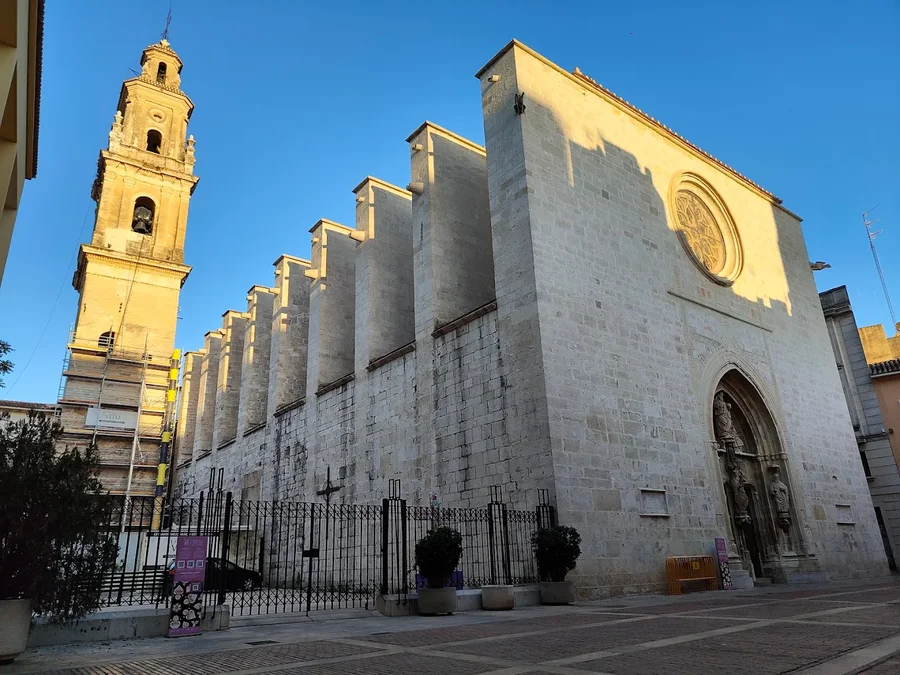

The Collegiate Church of Gandia is the jewel of the old town, and I am not exaggerating. This building has seen everything: earthquakes, wars and centuries of history. And here it still stands, as imposing as ever.
You do not need to be especially religious to be amazed by its architecture and the stories it keeps inside.
If you are interested in history or simply want to see something genuinely impressive, you should not miss it. It is the kind of place that makes you feel small, but in a good way.
How to Get There
If you are coming from the train station, the route is simple and pleasant:
-
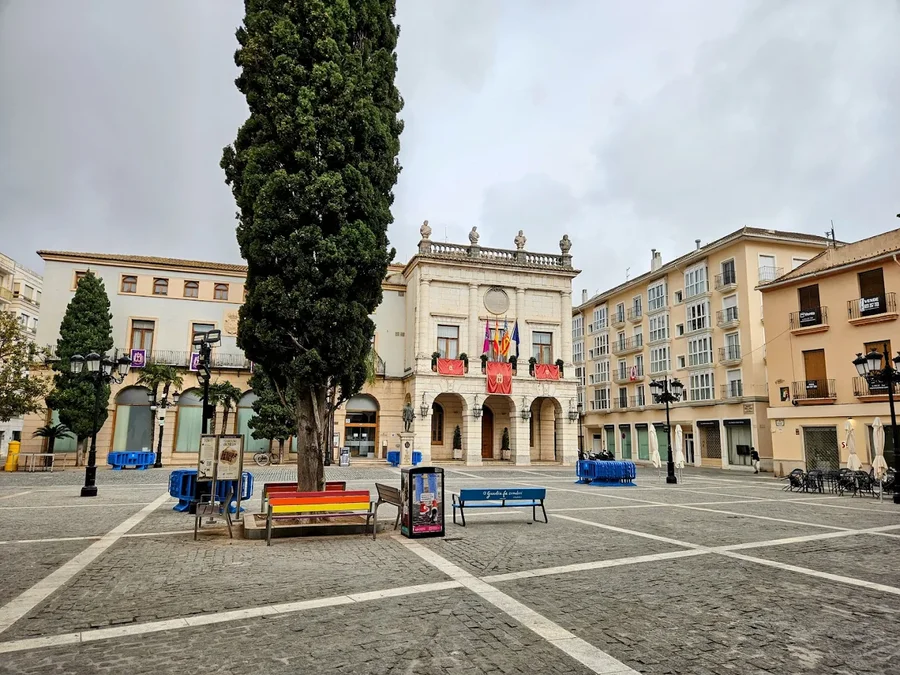
Head towards the Town Hall square, which we have covered in previous articles.
-
To get there, cross Calle Magistrado Catala and continue along San Pascual until you reach the square.
If you prefer public transport, you have several options:
-
La Marina bus: the nearest stop is opposite the train station.
-
L’Urbanet: line 3 has a stop in the Town Hall square itself.
However, as I always recommend, the best way to explore Gandia is on foot. Walking lets you absorb the atmosphere of the old town and notice small details you might otherwise miss.
The History of the Collegiate Church
The history of the Collegiate Church is, in many ways, the history of Gandia itself.
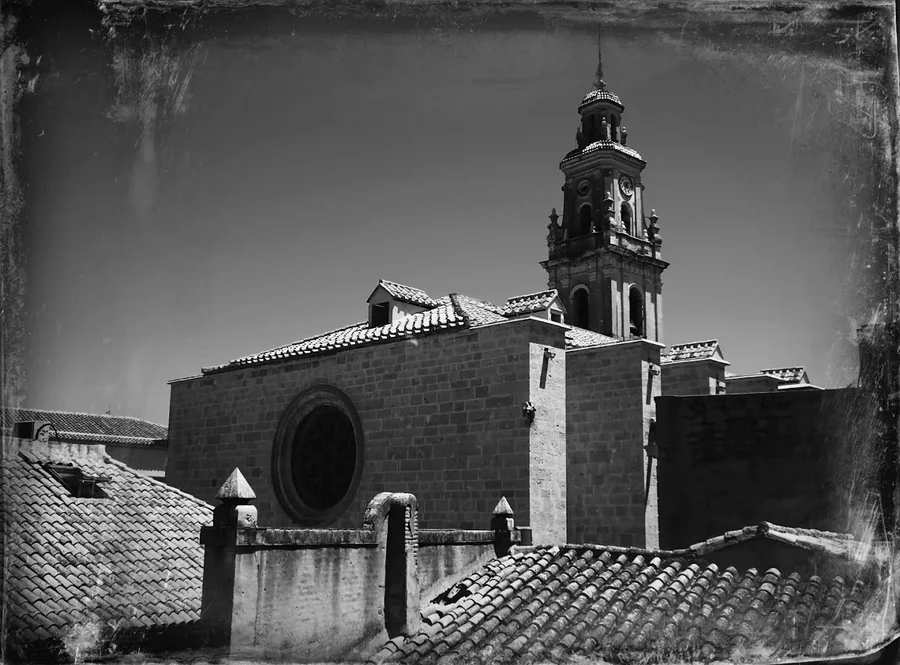
Its origins go back to the early days of the Christian city, just after the reconquest:
-
13th century: After James I conquered Bayren Castle in 1245, a parish church was established on the site of a former mosque. This church was dedicated to Saint Mary of the Assumption.
-
14th-15th centuries: Between 1372 and 1424, Alfonso the Old and Alfonso the Young, important figures in Gandia’s history, expanded the parish church.
-
15th-16th centuries: A second phase of expansion, carried out between 1499 and 1511 by Duchess Maria Enriquez, gave the church its current form by adding four bays.
-
1499: Pope Alexander VI, uncle of Duchess Maria Enriquez, raised the church to the rank of Collegiate Church by papal bull.
-
16th-19th centuries: The Collegiate Church underwent several reforms, some of them necessary because of earthquake damage, especially at the end of the 16th century.
-
19th century: With Mendizabal’s confiscation of church property, the Collegiate Church lost its title and became a simple parish church again.
-
1911: It recovered the title of Collegiate Church.
-
1931: It was declared a National Historic Monument, recognising its historical and artistic importance.
-
Spanish Civil War (1936-1939): The church suffered serious damage. It was set on fire, many works of art were lost, and its original square apse was destroyed.
-
From the 1940s onward: Restoration work began, giving it the appearance it has today.
A Tour of the Collegiate Church
The Doors
The Collegiate Church has two main doors, each with its own history and style:
-
Door of Saint Mary or the Market:
- Attributed to Joan Franch.
- Dates from the 14th century.
- Opens onto the Market square.
-
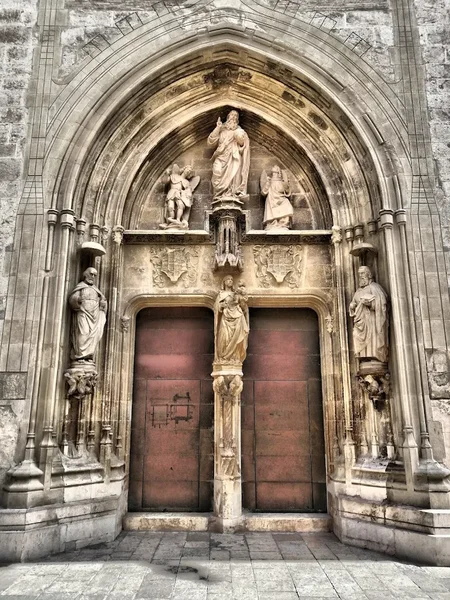
Door of the Apostles (main entrance):
- 16th-century Gothic style.
- Decorated with religious figures:
- Upper section: Jesus, flanked by Saint Gabriel and Saint Michael.
- Sides: Saint Peter and Saint Paul.
- Lower centre: Virgin Mary.
- Includes the coats of arms of the Borgia family and Maria Enriquez.
The Exterior: A Mix of Styles and Periods
-
Apse and Main Chapel: Rebuilt in brick in the 1940s, contrasting with the rest of the building.
-
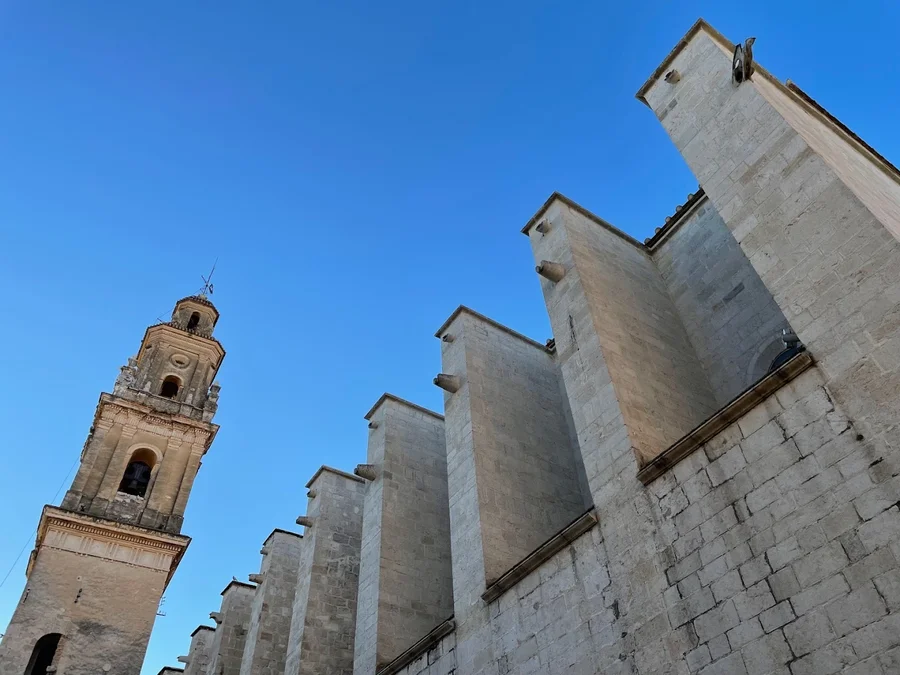
Bell tower:
- Neoclassical style.
- Height: 48 metres.
- Built in the 18th century after an earthquake in 1748.
- Architect: Francisco Trotonda.
- Completed in 1766.
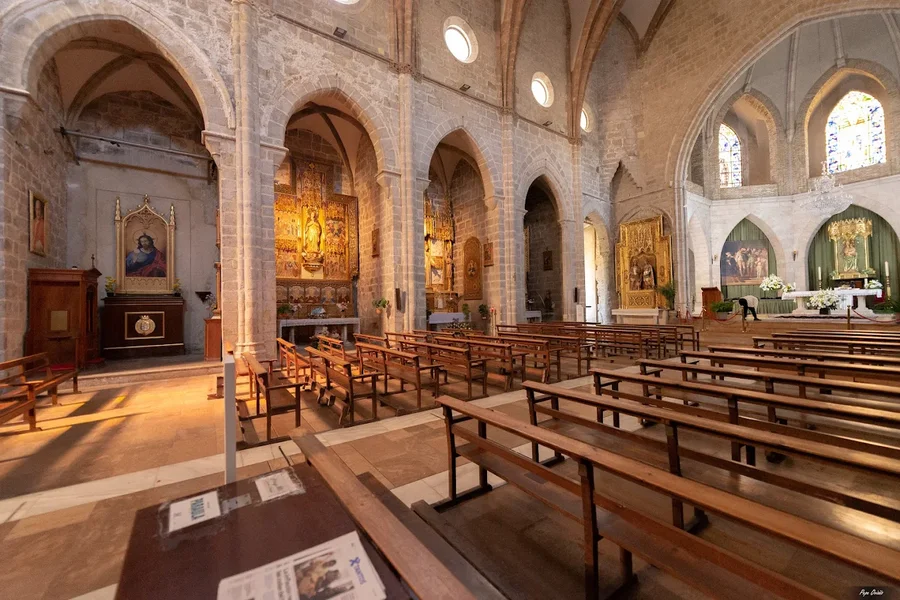
The Interior: Gothic and Neo-Gothic
Although much of the original interior was lost during the Civil War, the Collegiate Church remains impressive:
-
Architecture: Mainly Gothic, reflecting its medieval origins.
-
Altarpieces: Mostly neo-Gothic, created between the 1940s and the 1980s.
- They try to emulate the style of the lost originals.
- They help preserve the Gothic atmosphere of the church.
Practical Information for Your Visit
-
The Collegiate Church is open for most of the day.
-
Admission is free.
-
Visitors are advised to respect the silence and reflective atmosphere of the place.
Personal Conclusion
For anyone interested in history, architecture or simply looking for a moment of peace and reflection amid the bustle of the city, the Collegiate Church of Gandia is an essential visit.
Its location in the historic centre, next to the Town Hall, makes it an easy and convenient stop on any route through the city.