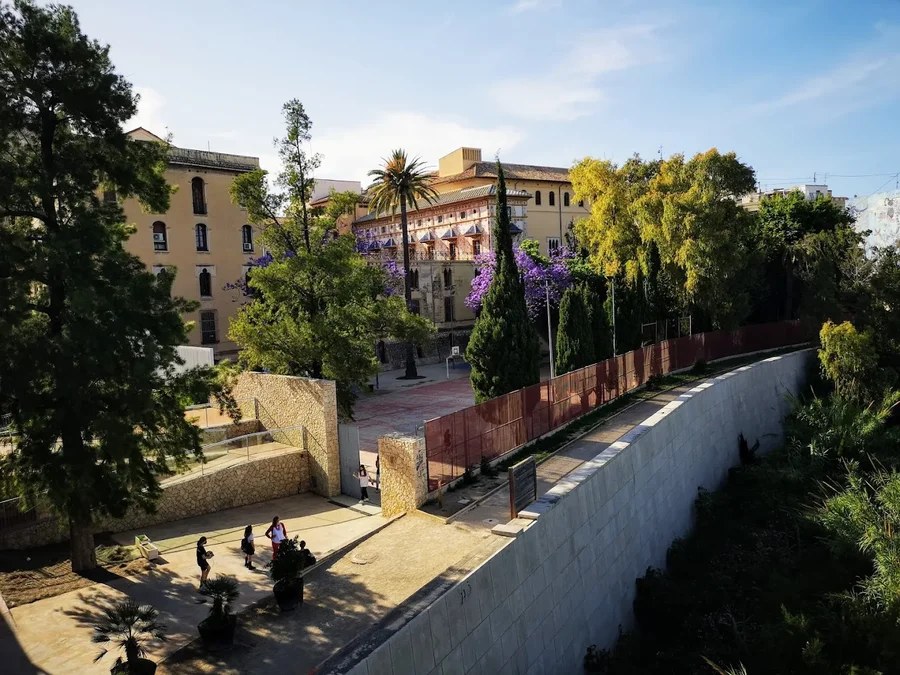

The Paseo del Serpis is the perfect place to escape the bustle and immerse yourself in Gandia’s natural beauty.
This urban path takes you alongside the Serpis River, offering a unique mix of nature and city that is easy to enjoy.
As you follow the route, you will discover historic bridges that tell Gandia’s story better than any textbook, along with endless opportunities for photos with the river in the background.
How to Get There
One of the advantages of this walk is its accessibility. You can start the route from several points:
-
The roundabout on Calle Rafelcofer, next to Maria Enriquez high school.
-
Calle Oliva.
-
Puente de la Feria.
-
The steps on Avenida de Alicante.
-
Calle Mossen Moragues.
-
Near the children’s centre on Avenida de Blasco Ibanez.
Although the route is mainly designed for pedestrians, many cyclists use it too.
If you go by bicycle, consider combining it with the beach bike lane for a longer route. Runners will also find this promenade ideal for training.
A Little History
The history of this walk is closely linked to the Serpis River. Until the 1940s, the Serpis was a powerful river that occupied much of the area where the promenade now runs.
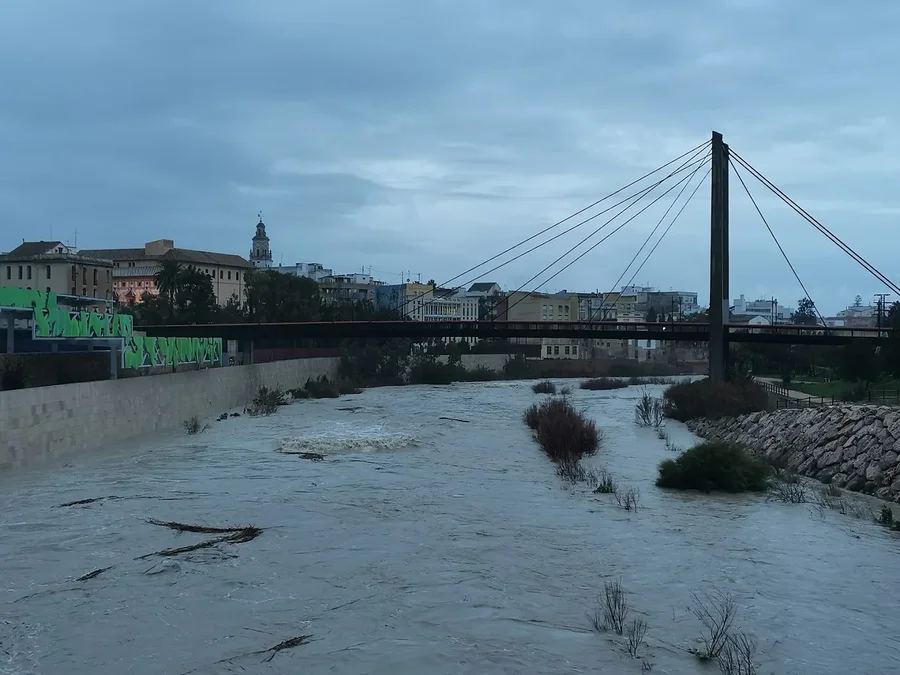
Everything changed with the opening of the Beniarres reservoir, which regulated the river’s flow and significantly reduced the amount of water passing through Gandia.
The promenade itself is a relatively recent addition to Gandia’s urban landscape. It was conceived as a way to make use of the space freed up by the reduction in the river’s flow.
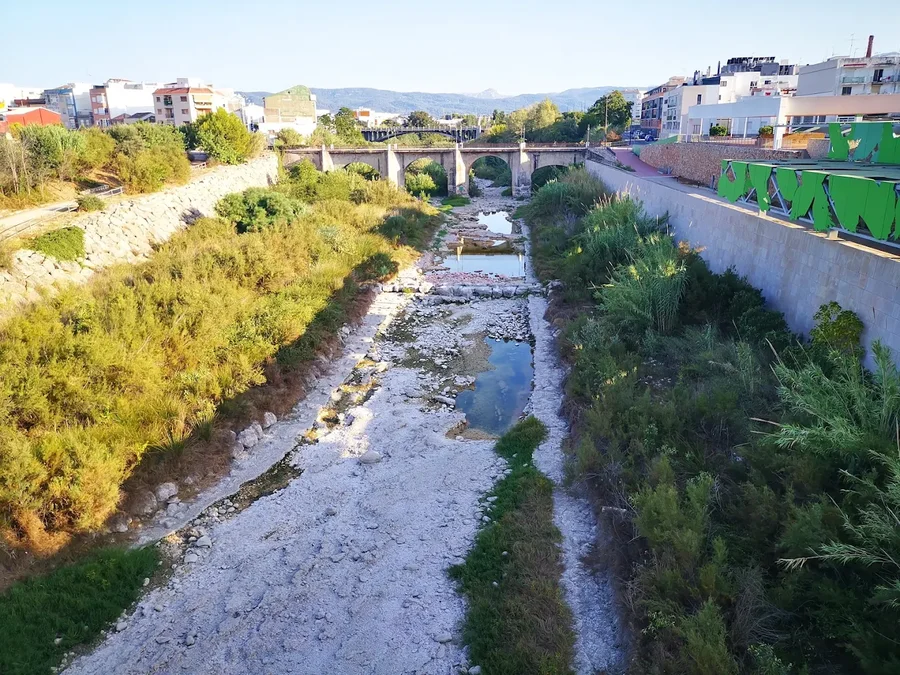
The construction of the promenade was an ambitious and costly project, with a budget of around 11 million euros.
The works lasted three years and culminated with its opening in March 2011, just before the municipal elections.
Although there were initially maintenance problems, with weeds quickly invading the promenade, the municipal authorities have taken measures to keep it in good condition. Today, it is in excellent shape.
The Route
Although it is not an extensive route, around 3-4 km, this walk offers a rich experience of history and landscapes.
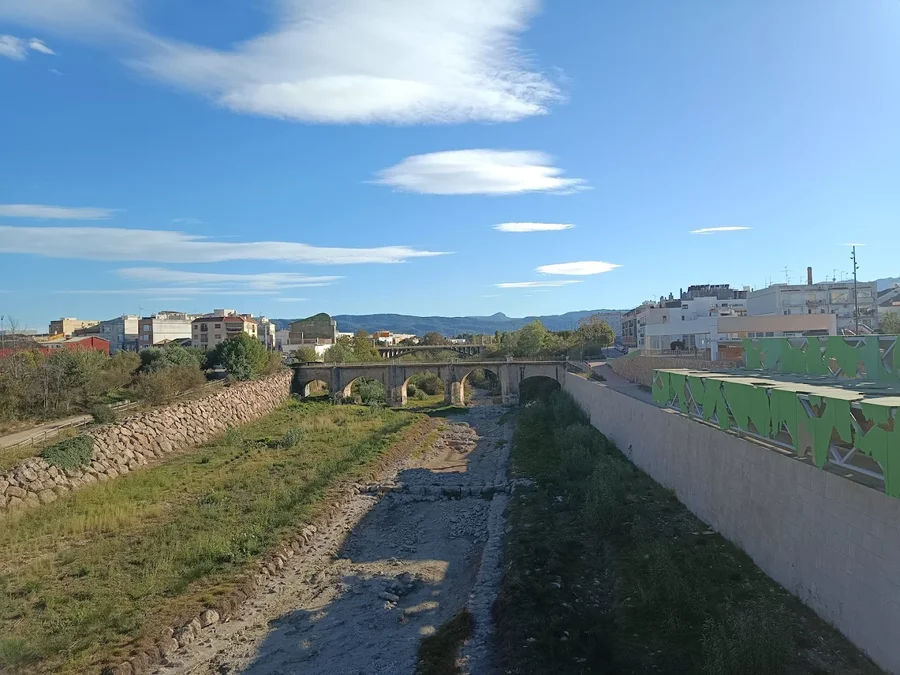
Let’s follow it, discovering the bridges and points of interest along the way.
The Gandia-Alcoy Railway Bridge
Our route begins at the roundabout where Calle Rafelcofer ends. Here we find the first of our bridges: the old Gandia-Alcoy railway bridge.
Built at the end of the 19th century, this bridge is a testimony to Gandia’s industrial era.
Although the railway line no longer operates, the bridge still stands and offers a pedestrian crossing.
Parque de las Ambrosias and Menendez y Pelayo Bridge
Continuing along the path, you pass through Parque de las Ambrosias, a green area in the process of recovery.
Shortly after, you reach Menendez y Pelayo Bridge, also known as Raval Bridge.
This is the most modern bridge on the route, built in the 1990s to connect the Benieto industrial estate with central Gandia.
The Old Oliva Road Bridge
After a section along Calle “Vora del Riu”, meaning riverbank, you reach the Old Oliva Road Bridge.
This bridge has a fascinating history that goes back to the 14th century. Originally a Gothic bridge, it has undergone many transformations over the centuries, including the loss of two arches during a river flood in 1914 and a controversial restoration at the end of the 1980s.
The Serpis Footbridge and the Historic Centre
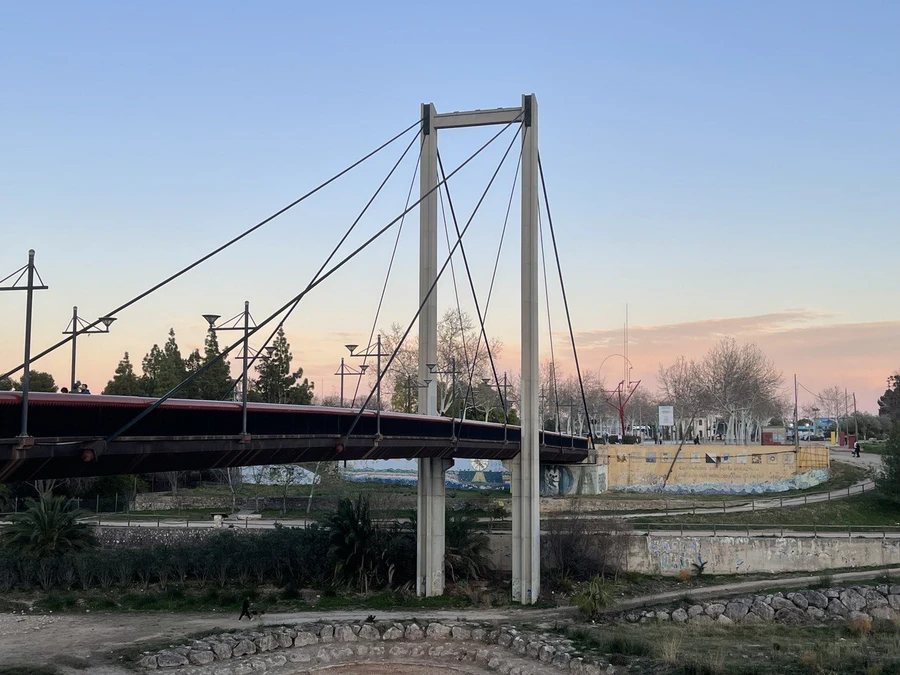
Continuing on, you reach the Serpis Footbridge, also known as Pasarela de la Feria. Opened in 1988, this pedestrian bridge connects Paseo de las Germanias with Parque del Este and has become one of Gandia’s modern symbols.
From this point onward, the walk takes you past some of Gandia’s most important historic buildings:
-
The Ducal Palace, the city’s most emblematic monument.
-
The Convent of the Poor Clares, from the 16th century.
-
The best-preserved remains of Gandia’s city walls.
-
The former San Marcos Hospital, now converted into the Archaeological Museum of Gandia (MaGa).
Avenida de Alicante Bridge and the Old Railway Bridge
The route continues past the Avenida de Alicante bridge, built at the end of the 19th century to connect Gandia with the road between Alicante and Valencia.
Nearby, you will find the remains of the old railway bridge that linked the lines between Carcagente and Denia, built in 1884.
The Sports Centre and Carrefour Bridge
The final section of the walk takes you alongside Gandia’s sports centre, where you can see the Guillermo Olagüe football field.
Finally, you reach the last bridge on the route: Carrefour Bridge, formerly known as Continente Bridge.
This concrete bridge, built in 1994, connects the city with the Carrefour shopping centre.
The Alternative Route
For those who want a different perspective, there is the option of walking along the right bank of the river.
This route offers different views of the same points of interest and takes you through Parque del Este, one of the most beautiful green areas in Gandia.
Final Thoughts
For visitors, this walk is almost essential. It lets you see Gandia from a unique perspective, appreciate its historical heritage and enjoy nature right in the urban centre.
It is an accessible route for almost everyone, ideal for families, couples or anyone looking for a quiet place to exercise.
However, it is important to keep in mind that much of the route is exposed to the sun, so it can be hot in summer.
I recommend bringing water, sun protection and, if possible, doing the walk during the cooler hours of the day.