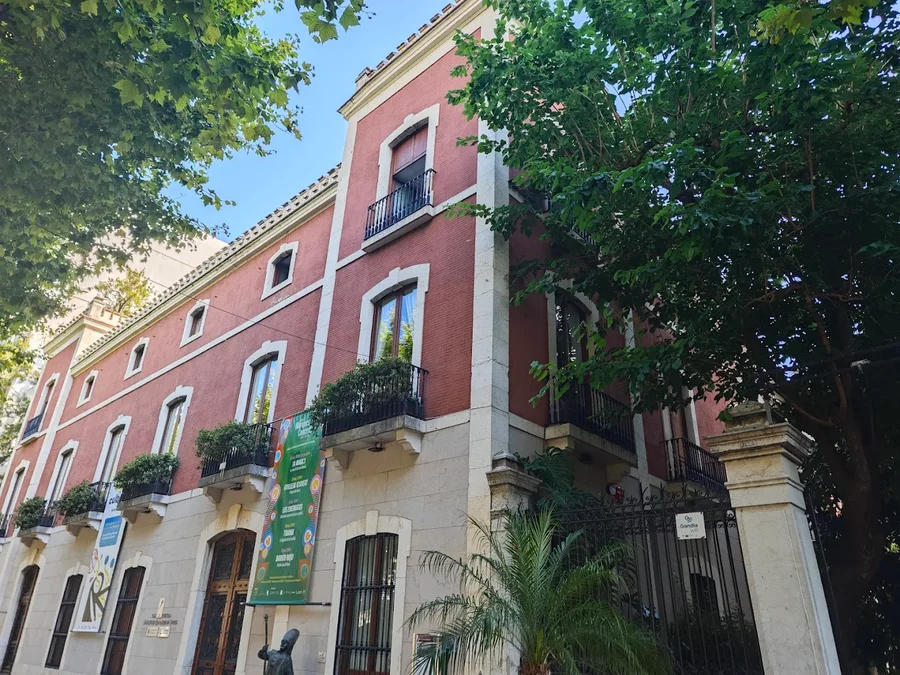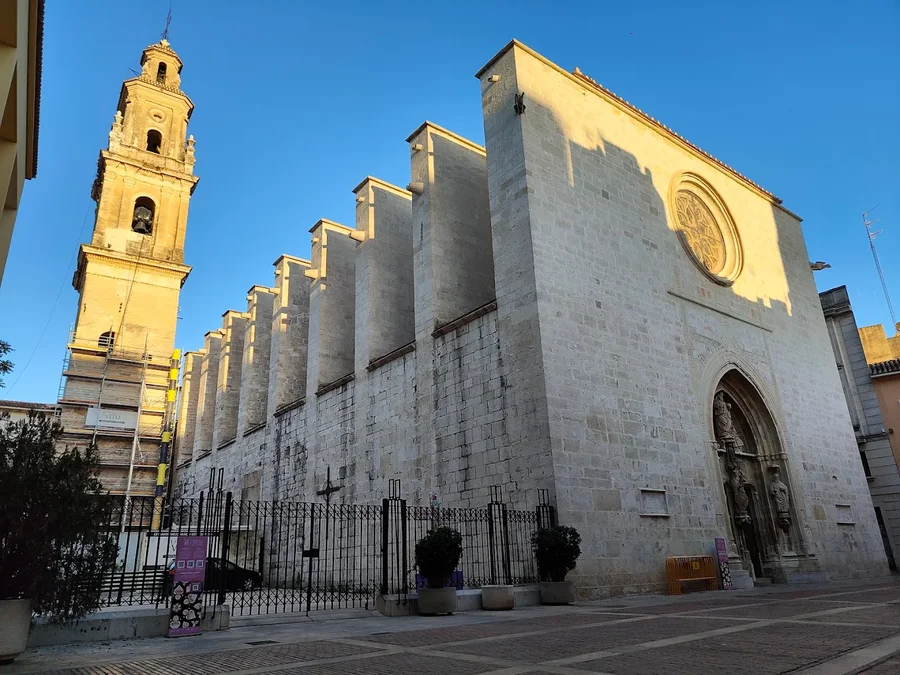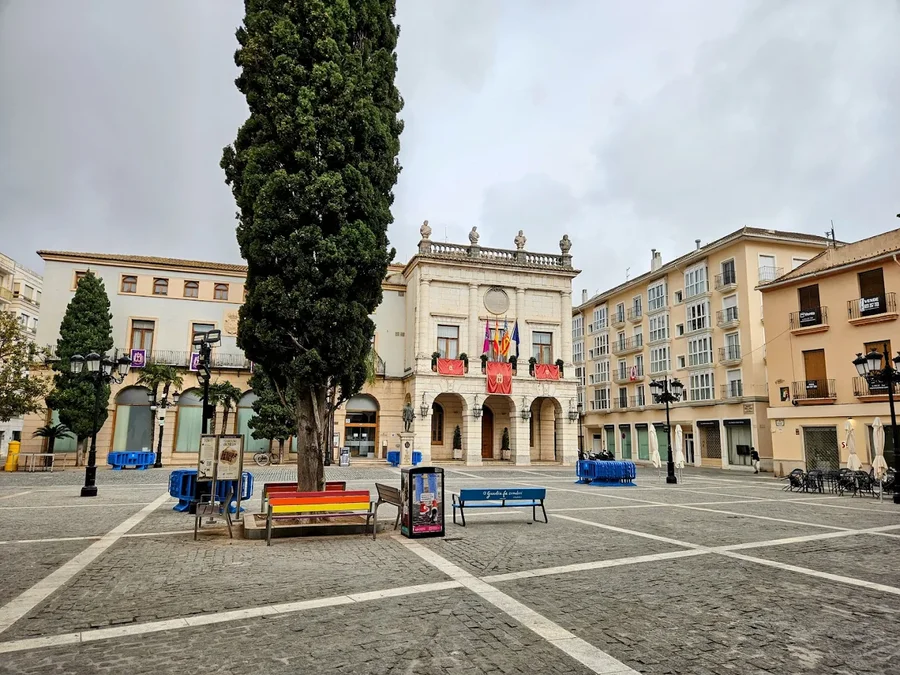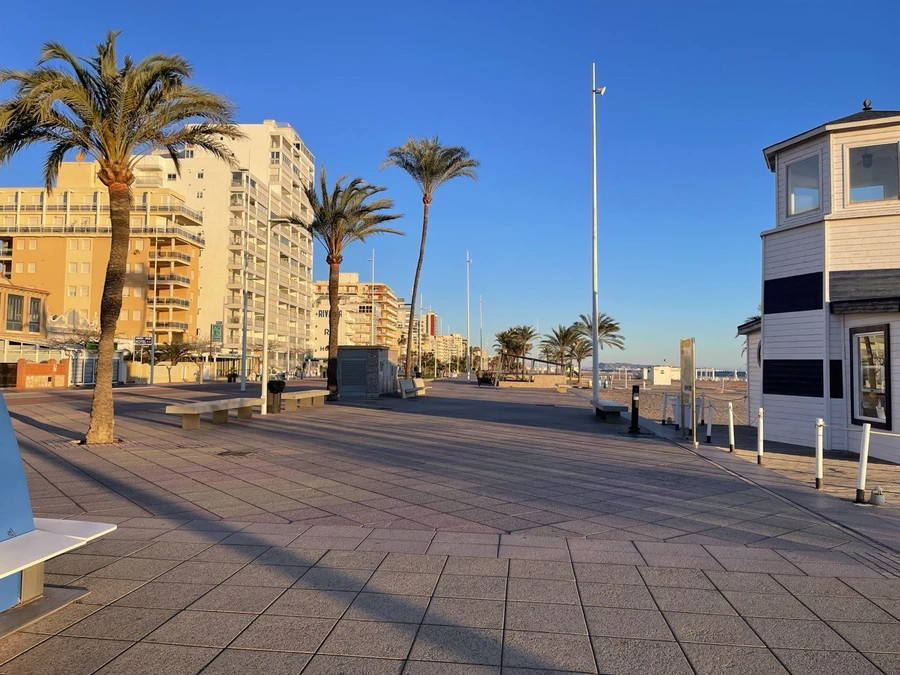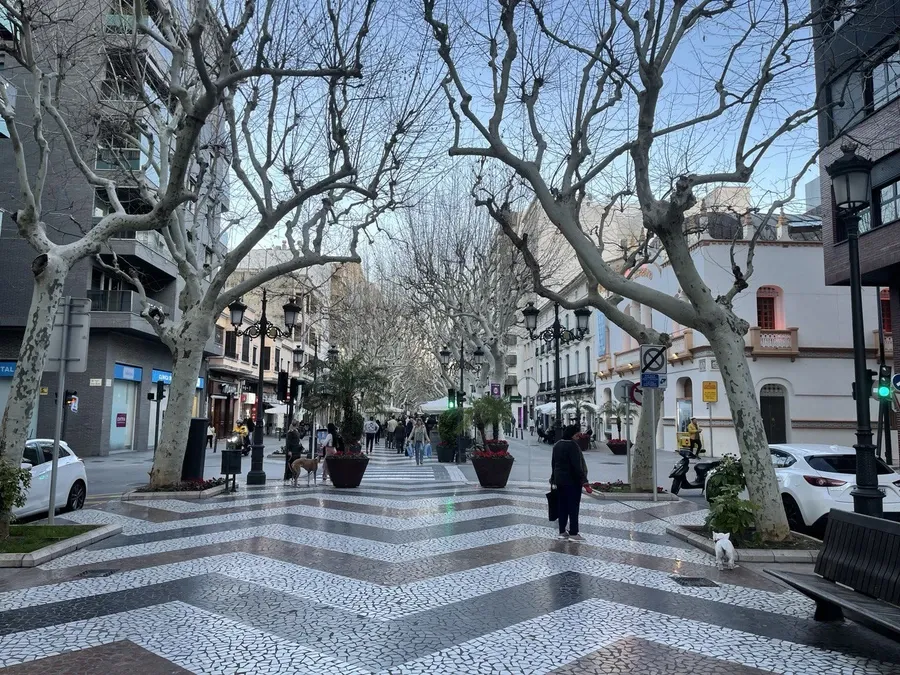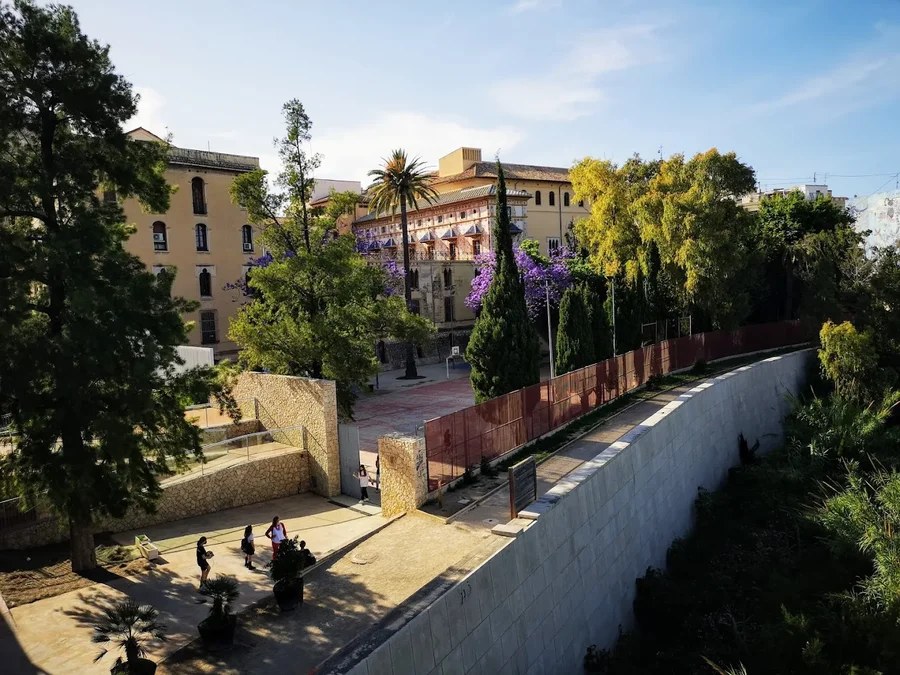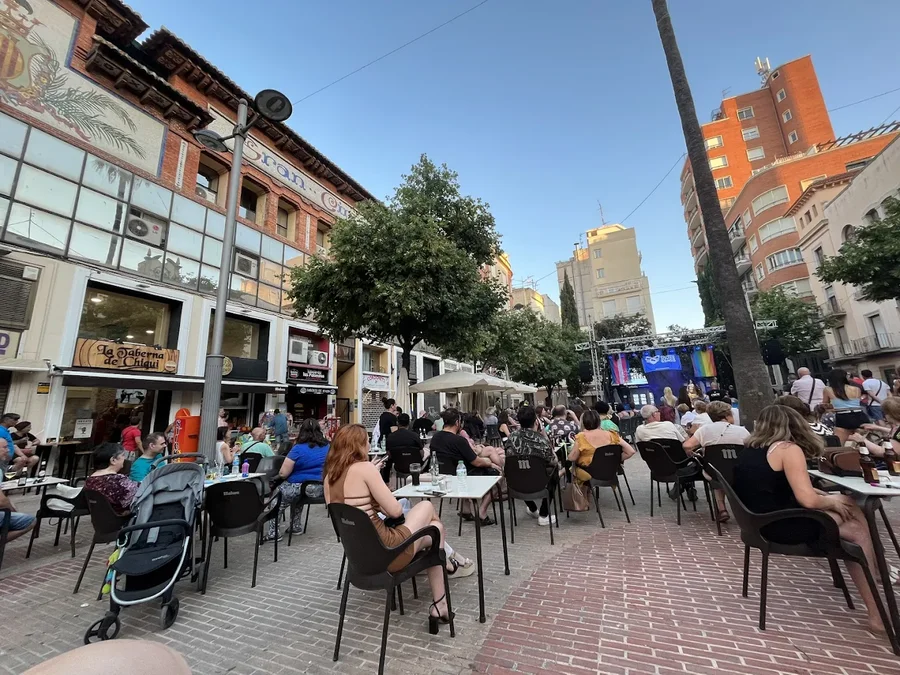
Calle Mayor is the liveliest place in Gandia’s old town. It is great for walking, shopping or simply watching daily life go by.
In this article, I will tell you everything about this special street.
How to Get There
If you are coming from the train station, head towards Plaza de las Escuelas Pias. From there, you only need to keep going straight until you see the inscription “Carrer Major” on the ground, which is Calle Mayor in Valencian.
For those who prefer to arrive by car, the options are the same as for visiting the historic centre:
-
The Gregorio Mayans high-school car park.
-
The Parque del Este car park.
Both are free, although keep in mind that the second one is not available during Gandia’s festivals in mid-October.
Calle Mayor Today
Today, Calle Mayor is mainly a shopping area. Here you will find a wide variety of shops, especially clothing stores, representing Gandia’s traditional local commerce.
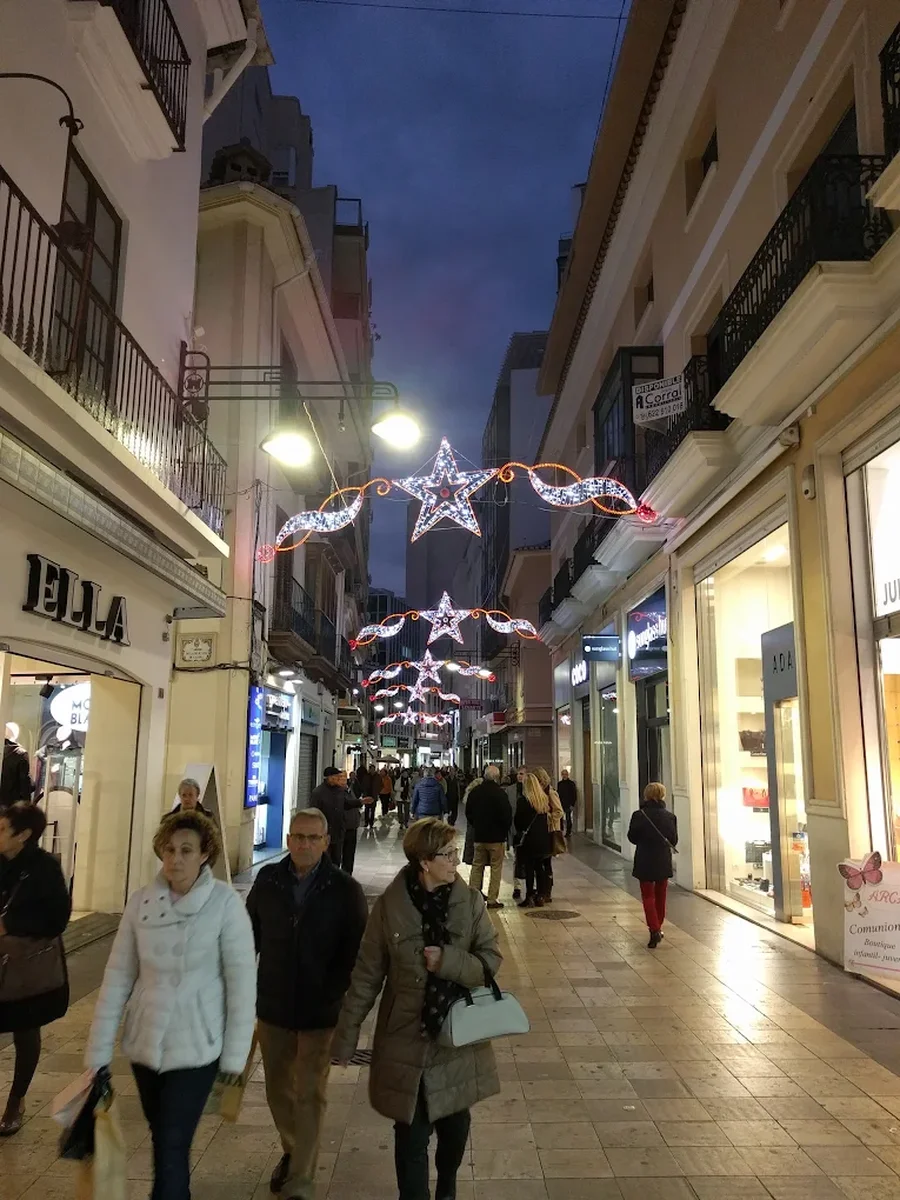
However, the street has not completely lost its historical and tourist value.
One example is the image of the saint that can be seen around Calle Juan Andres, or Joan Andres in Valencian. These small details remind us that we are on a street with centuries of history.
Its strategic location also makes it an almost unavoidable route for tourists visiting other points of interest, such as:
-
Plaza Loreto.
-
Plaza de las Escuelas Pias.
The “Historic Centre” Brand
In an attempt to strengthen commerce in the area, the “Historic Centre” brand was created.

This initiative brings together all the shopkeepers of Calle Mayor and the surrounding streets, making it one of the city’s main shopping destinations.
However, this initiative is not without challenges. One of the main problems is the difficulty of attracting beach tourism.
The reason is simple but crucial: parking. The lack of free and accessible parking near the historic centre means many tourists prefer shopping centres on the outskirts, such as Plaza Mayor, Carrefour or La Vital, which offer free parking.
Plaza de las Escuelas Pias
At the end of Calle Mayor you reach Plaza de las Escuelas Pias, a space that, although small, is full of history and meaning.
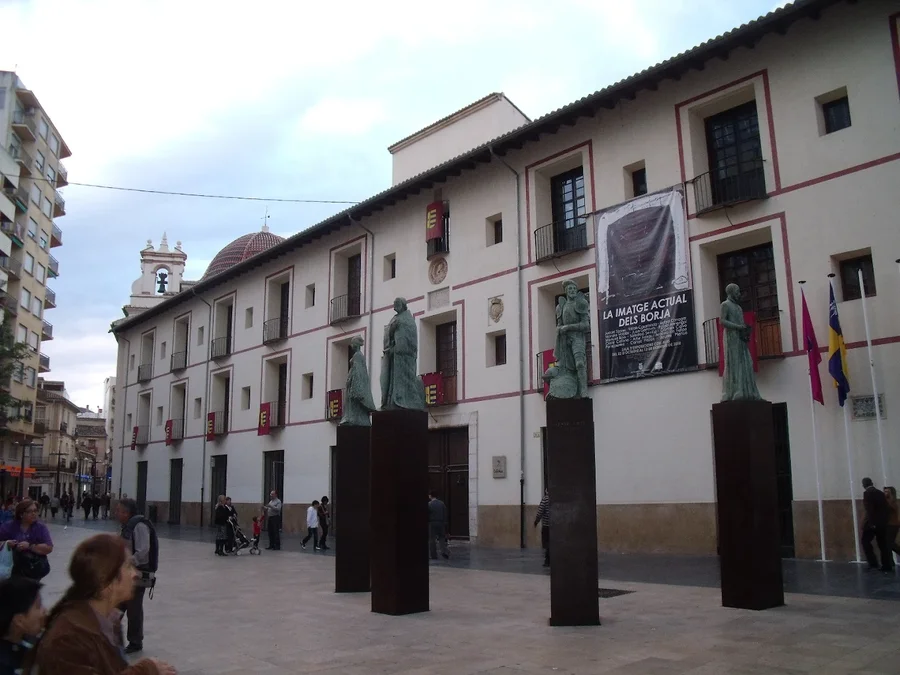
The Former University of Gandia
Here you will find the Former University of Gandia, opened by Saint Francis Borgia in 1549. It was the first Jesuit university and remained in operation until 1772.
Its closure was linked to the expulsion of the Society of Jesus from Spain by Charles III in 1767.
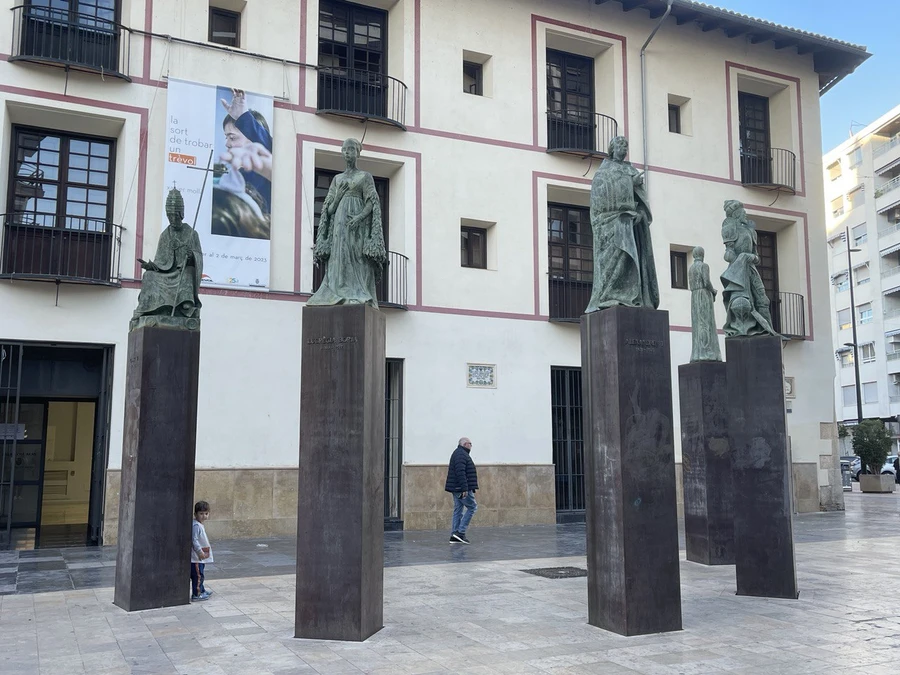
Today, the building has several uses:
-
The ground floor houses municipal offices and an exhibition room.
-
The rest of the building is used as a Piarist school for secondary and sixth-form education.
-
It is also one of the sites of the National Distance Education University (UNED).
The Borgia Statues
In 1998, a series of statues representing key figures in Gandia’s history was installed in the square:
-
Popes Callixtus III and Alexander VI.
-
Cesare and Lucrezia Borgia, children of Alexander VI.
-
Saint Francis Borgia.
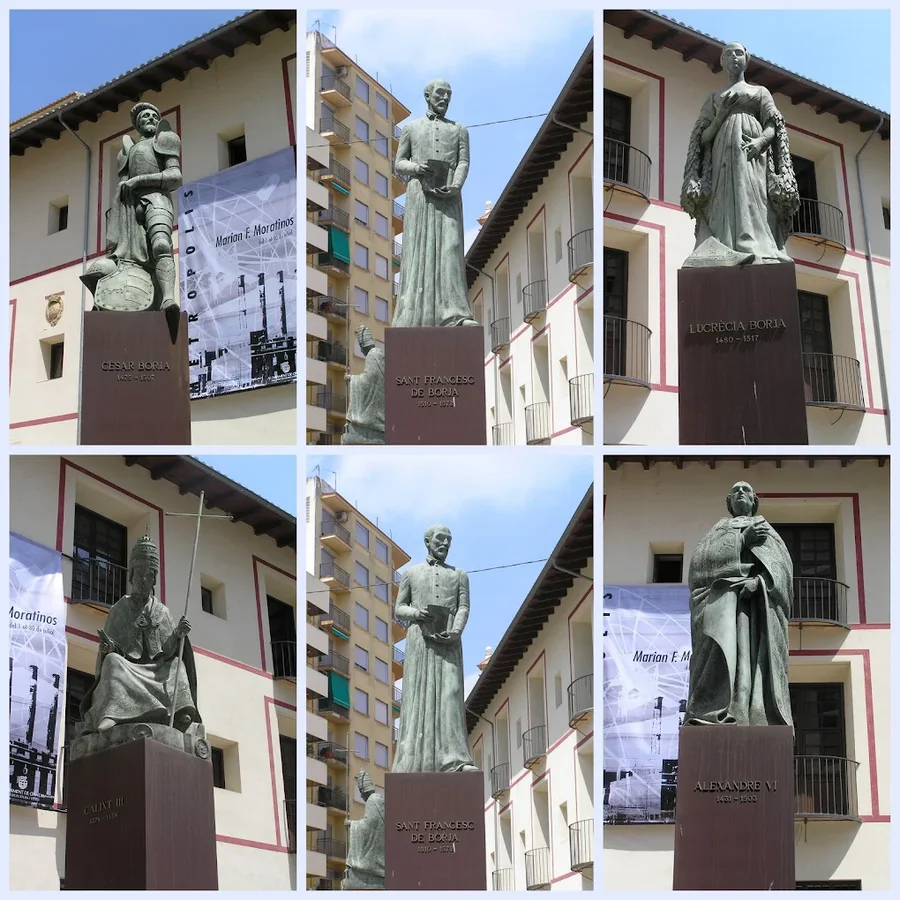
These statues are not only a tourist attraction, but also a reminder of Gandia’s rich and complex history and its connection with one of the most influential families of the Renaissance.
Final Thoughts
For visitors, a walk along Calle Mayor is an essential experience. Not only for the shopping, but for the chance to immerse yourself in authentic Gandian life.
It is a more personal and characteristic alternative to the large shopping centres, and a chance to connect with the essence of the city.