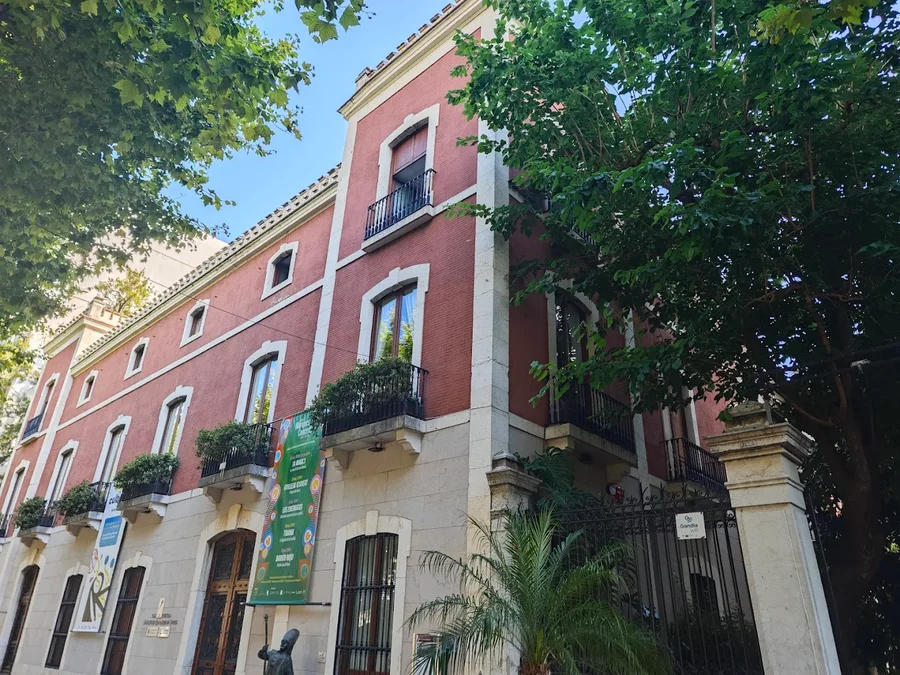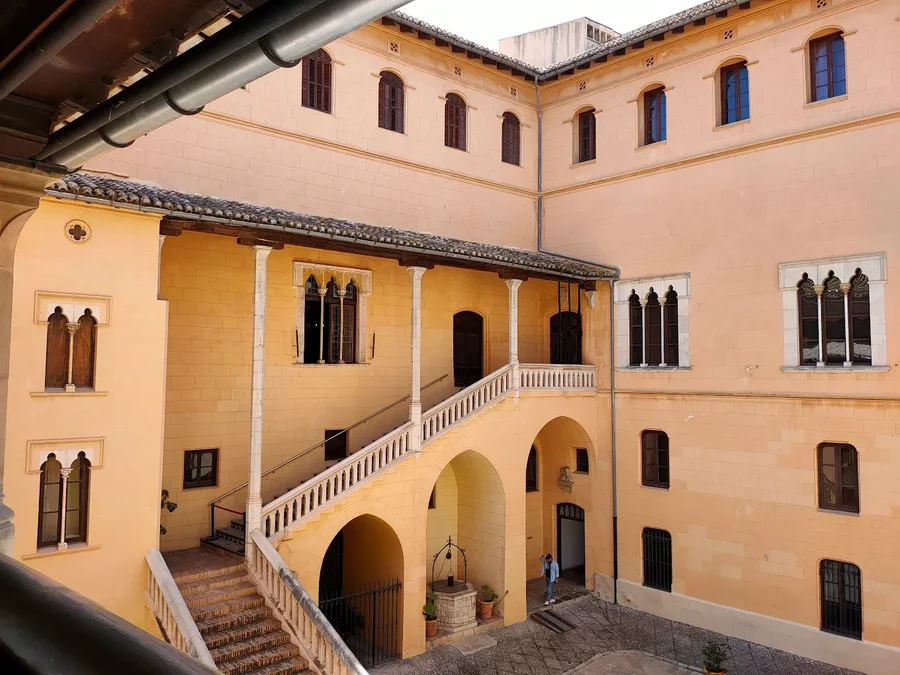

The Ducal Palace of the Borgia, located in Gandia, is one of the finest examples of Valencian civil Gothic architecture you can visit.
Known as the “little Versailles”, this historic building combines the architectural richness of the 15th century with the story of the influential Borgia family.
If you are planning a getaway to the Valencian coast and want something beyond sun and beach, this article is for you. After reading it, this palace will be high on your list of places to visit.
A Little History to Begin With
Before diving into the details of the visit, let me briefly tell you the story of this impressive building. The Ducal Palace of the Borgia is a living testimony to one of the most influential and controversial families in Spanish and European history: the Borja, or Borgia as they were known in Italy.
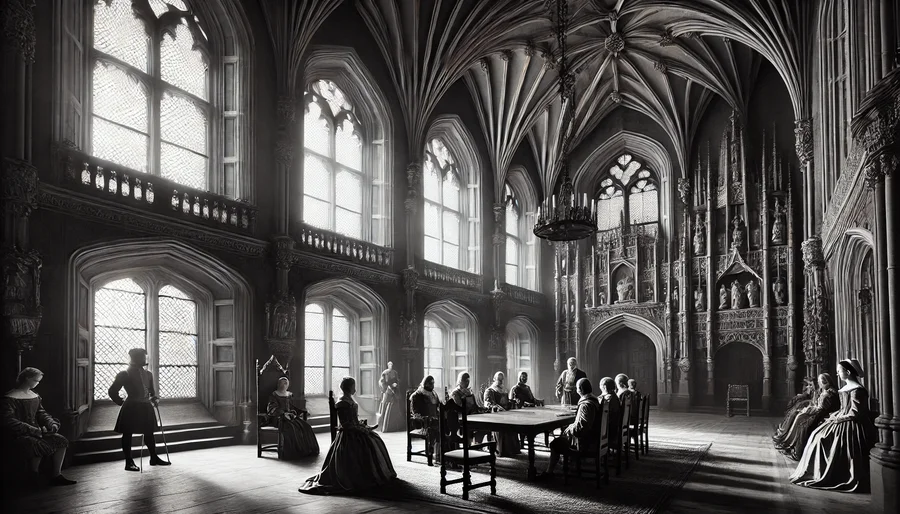
Built in the 14th century, this palace was the ducal residence of the Borgia family for generations.
Does the name Alexander VI, one of the most famous, or infamous, popes in history, sound familiar? He was born here, in this very palace. Imagine for a moment the secrets, intrigues and decisions that must have taken shape within these walls.
But the palace’s history did not end with the Borgia family. After the family lost influence, the building passed into the hands of the Jesuits, who used it as a novitiate.
This mixture of uses over the centuries has left a unique mark on the architecture and decoration of the palace, which we are now lucky enough to explore.
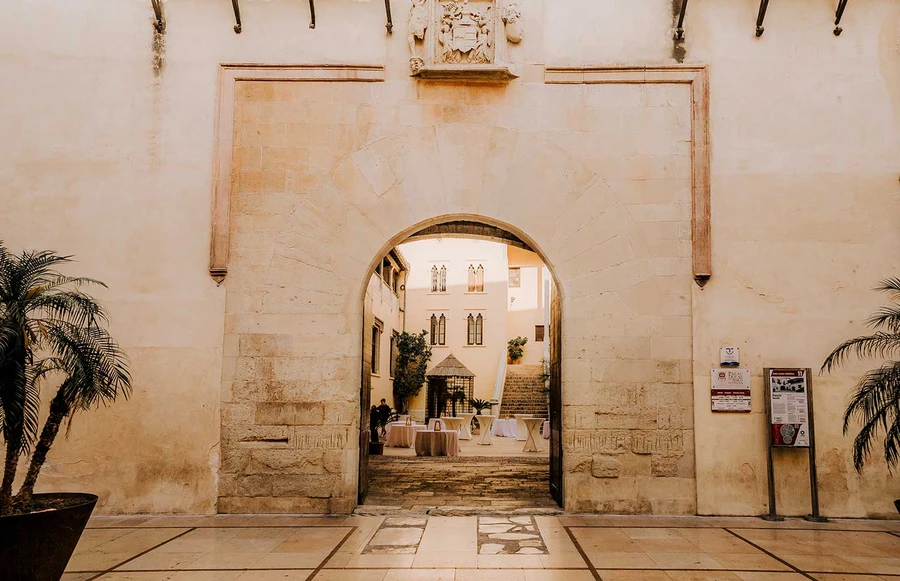
What Makes This Palace So Special?
Now that we know a little of its history, let’s look at what makes the Ducal Palace of the Borgia a place you should not miss:
-
Impressive architecture: As soon as you enter, the majestic main staircase will catch your eye. It is so imposing that you can almost imagine dukes and duchesses climbing it in their finest clothes. The coffered ceilings, vast rooms and inner courtyards transport you to another era.
-
A mix of styles: Because of its long history, the palace is a blend of architectural styles. You can see Gothic, Renaissance and even Baroque elements.
-
Exceptional preservation: Despite its age, the palace is incredibly well preserved. The original ceramic floors, for example, are so well maintained that they look newly laid. It is a testament to the careful restoration work carried out over time.
-
First-rate guided tours: For just EUR8, you can access a guided tour that takes you on a journey through time. The guides are not mere narrators; they are true history enthusiasts who make every room come alive through their explanations.
A Tour of the Palace
Let’s take a short virtual tour through the most outstanding parts of the palace:
The Courtyard of Arms
Your visit begins in the Courtyard of Arms. As soon as you enter, you will find an imposing doorway crowned by a semicircular arch, one of the few remaining traces of the original construction.
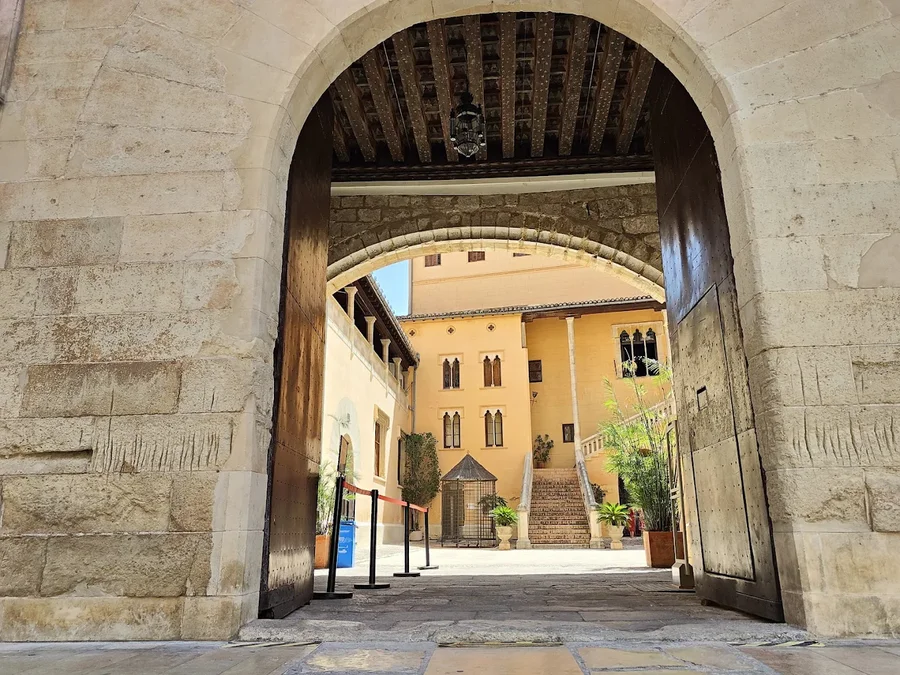
Look closely at the door bolt; it has been in place for centuries and still preserves the bands representing the Crown of Aragon.
On one side, you will see a small staircase leading to the Hall of Crowns. Although you cannot climb it in order to preserve the original ceramic floor, it is worth admiring the only Gothic window that remains in the palace, located just above it.
The Hall of Crowns
The majestic Hall of Crowns takes its name from the double crown decorating the coffered ceiling, a symbol of Alexander VI’s papal coronation.
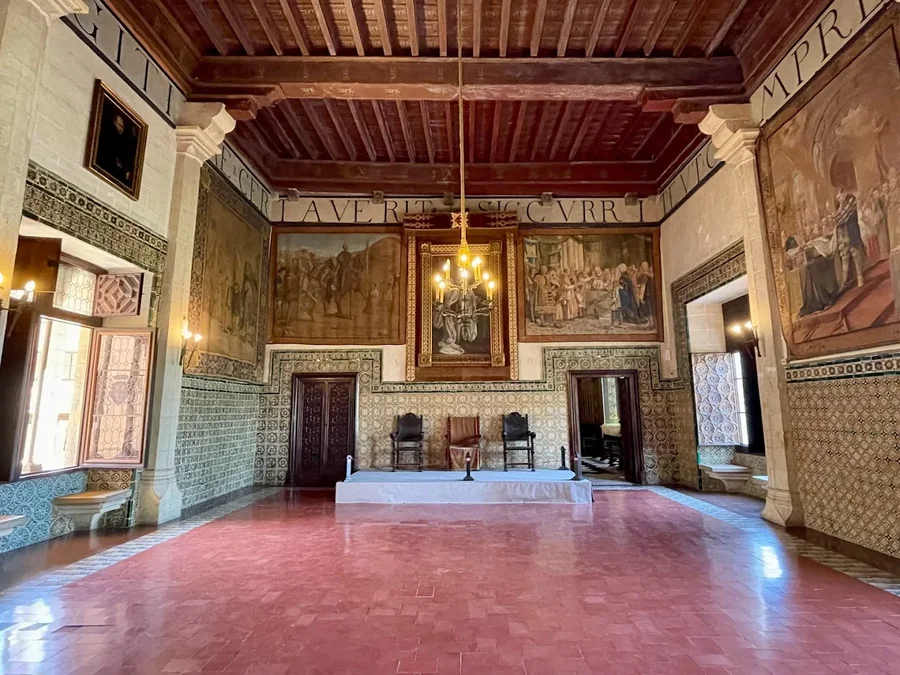
The walls are decorated with eight impressive sargas narrating the life of Francis Borgia. These paintings, which at first glance could look like tapestries, were commissioned by the Society of Jesus in the 20th century.
The colourful ceramics decorating the room imitate the Sevillian Mudejar style, adding an exotic touch to the atmosphere.
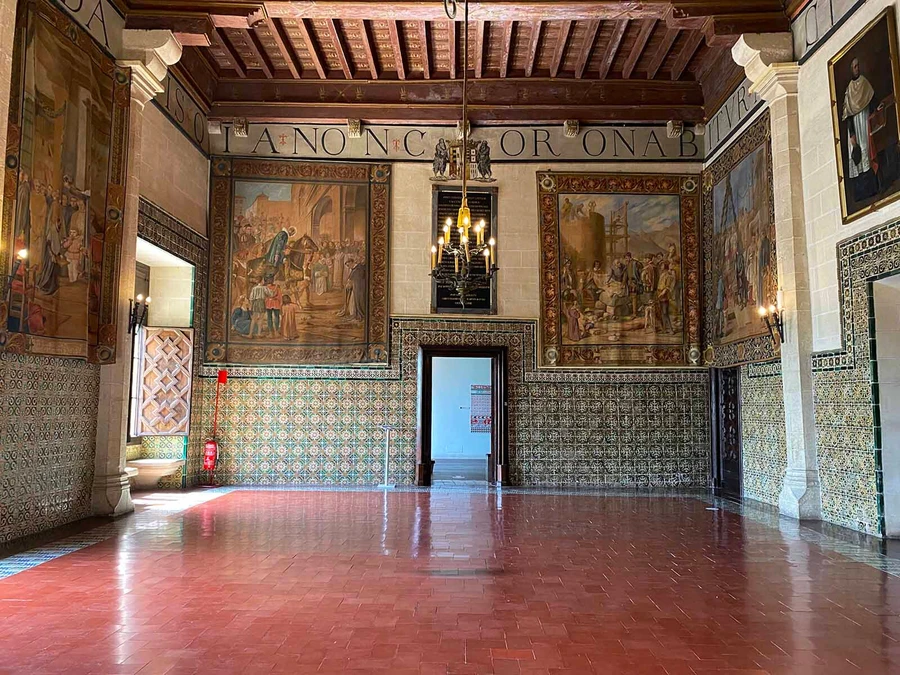
Do not miss the inscription around the room: “Run so that you may understand that only the one who fights according to the law will be crowned”, a reminder of this hall’s original purpose as a place for audiences and trials.
The Neo-Gothic Chapel
The Neo-Gothic Chapel, although now a sacred space dedicated to Saint Francis Borgia, was originally the duke’s office.
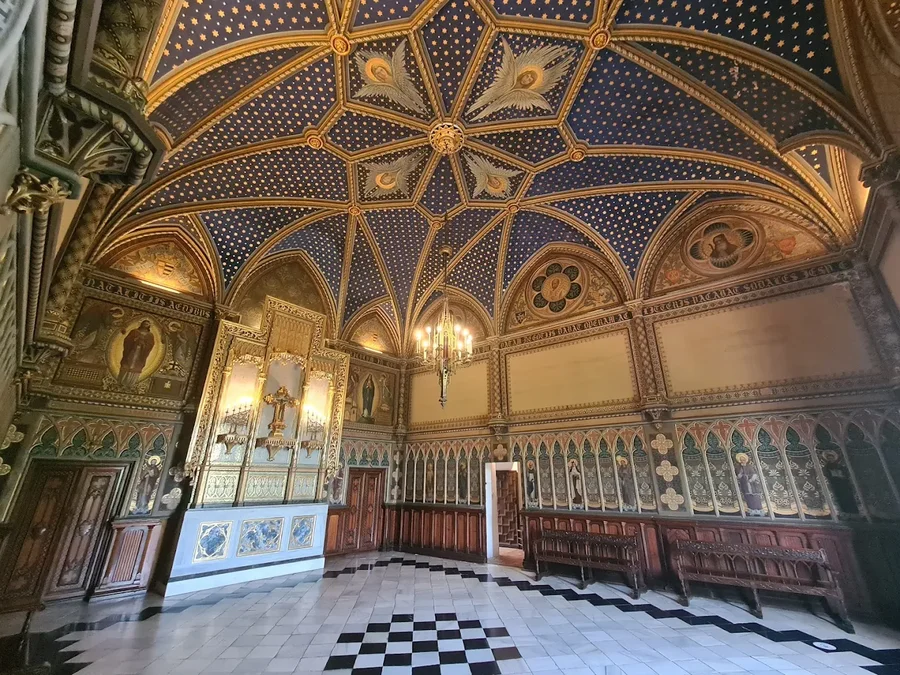
The most impressive feature of this room is undoubtedly its ceiling, decorated with countless stars that make you feel as if you were standing beneath a night sky. The beautiful rose window above the window completes the mystical atmosphere of the space.
The Room of Francis Borgia
Unlike the rest of the palace, which is very luxurious, the room of Francis Borgia is very simple. This simplicity shows that Francis Borgia preferred to live modestly and help poor people.
In this room, you can see something very special: a glass case containing a mask made from Francis Borgia’s face after his death. This mask reminds visitors of the good he did in his life.
The Oratory
Although you cannot enter, the Oratory can be seen from the door. This small space was where the dukes and duchesses of the Borgia family carried out their private prayers.
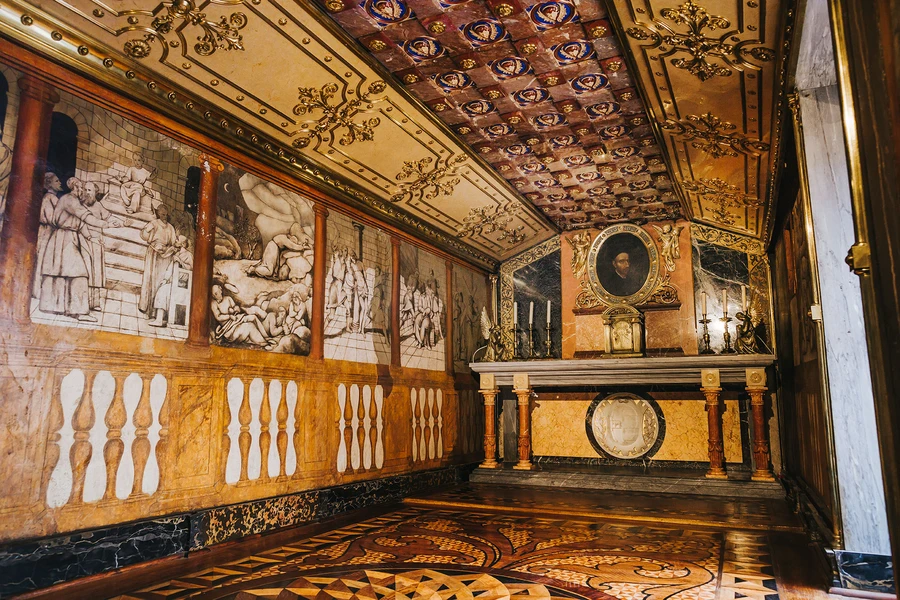
The Duchess’s Chamber
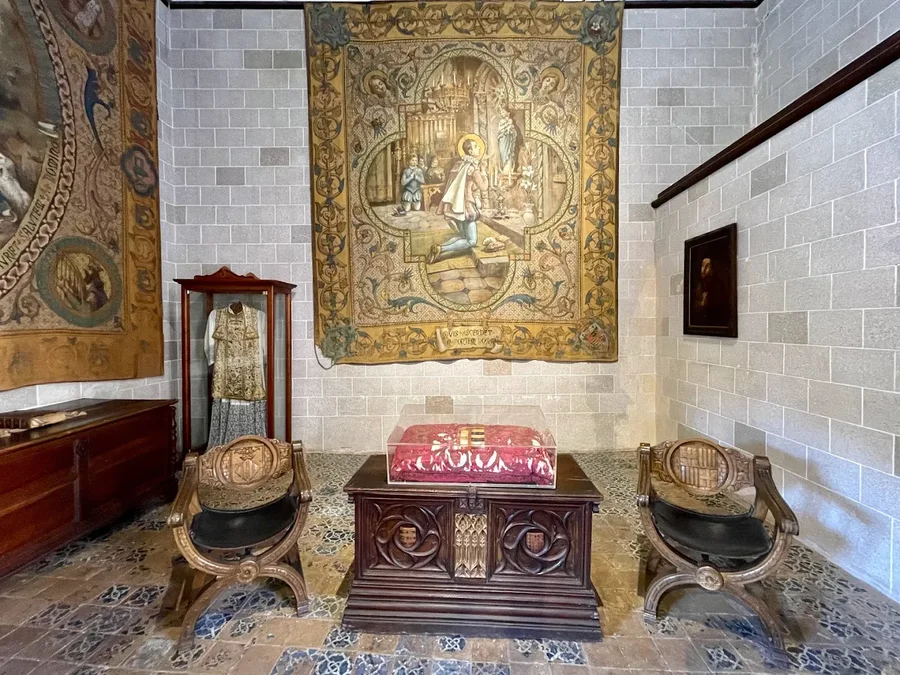
The Duchess’s Chamber is a room of great historical importance because Saint Francis Borgia was born here in 1510. The neo-Gothic arches decorating the room create an elegant and solemn atmosphere.
Here you can see a cushion with the Borgia coat of arms and the saint’s chasuble, brought specially from Rome.
The Hall of the Eagles
This space represents one of the first Baroque transformations carried out in the building, marking an evolution in its architectural style.
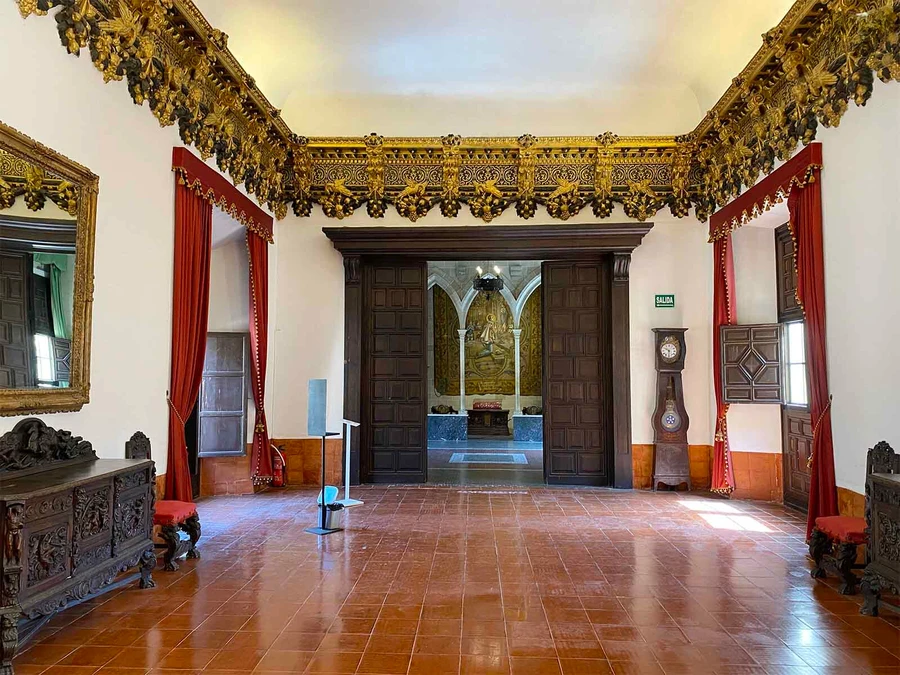
What stands out most when entering this room is its impressive frieze.
A frieze is a decorative band running along the upper part of the walls, just below the ceiling.
In this case, the frieze is decorated with numerous sculpted eagles. These eagles are finished with gold leaf, a technique that consists of applying thin sheets of real gold to a surface.
The Room of the Estates of Sardinia
The Room of the Estates of Sardinia recalls the family’s possessions on the Mediterranean island.
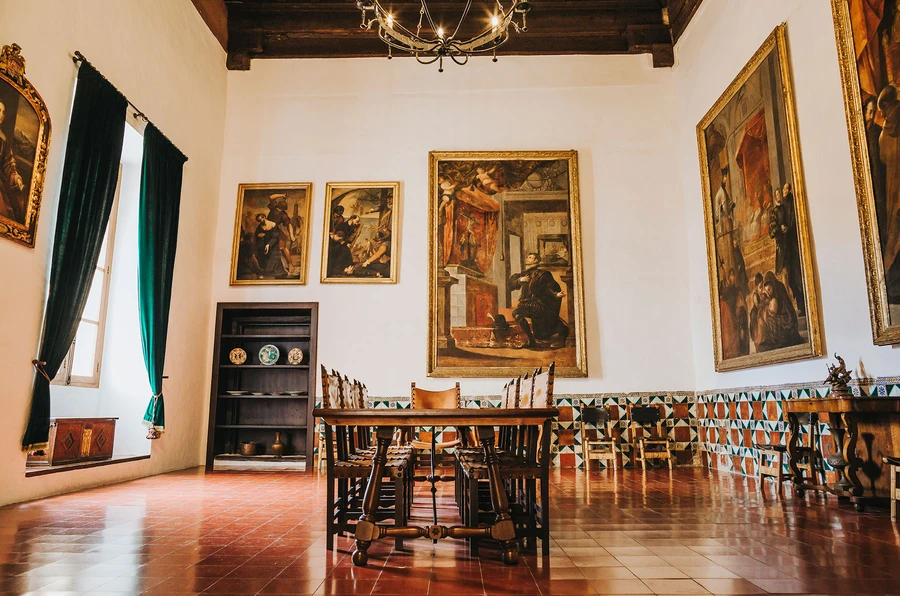
The walls are decorated with huge 18th-century canvases narrating scenes from the life of Francis Borgia, while the lower wall section features beautiful 17th-century mocadoret tiles.
The Green Room
The Green Room is dedicated to the Society of Jesus, displaying portraits and sculptures of leading Jesuits.
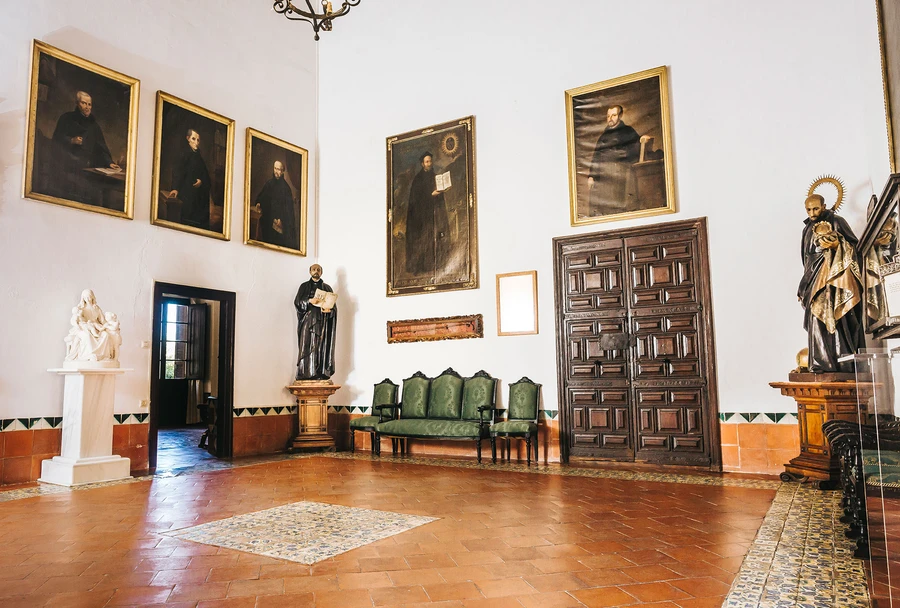
Here you can also see the remains of the camp bed on which Francis Borgia died and some letters written in his own hand.
The Turret Room
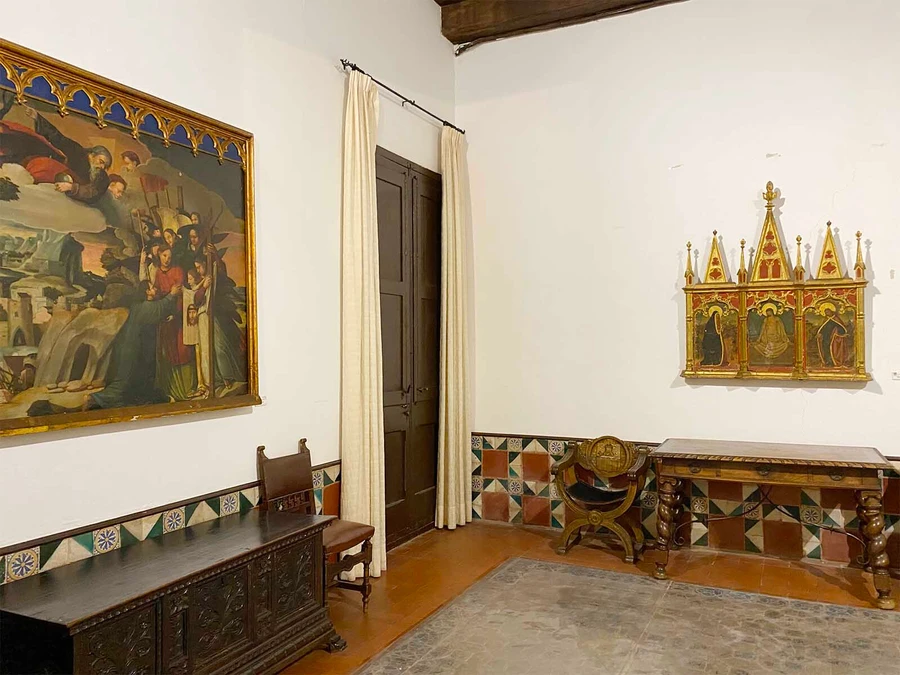
According to tradition, Maria Enriquez slept in the Turret Room. This space preserves one of the oldest floors in the palace and hides an intriguing spiral staircase of Islamic origin, accessible only during night guided tours.
The Golden Gallery
The spectacular Golden Gallery is undoubtedly the highlight of the visit. Built between 1703 and 1716, it was inspired by the famous Hall of Mirrors at Versailles.
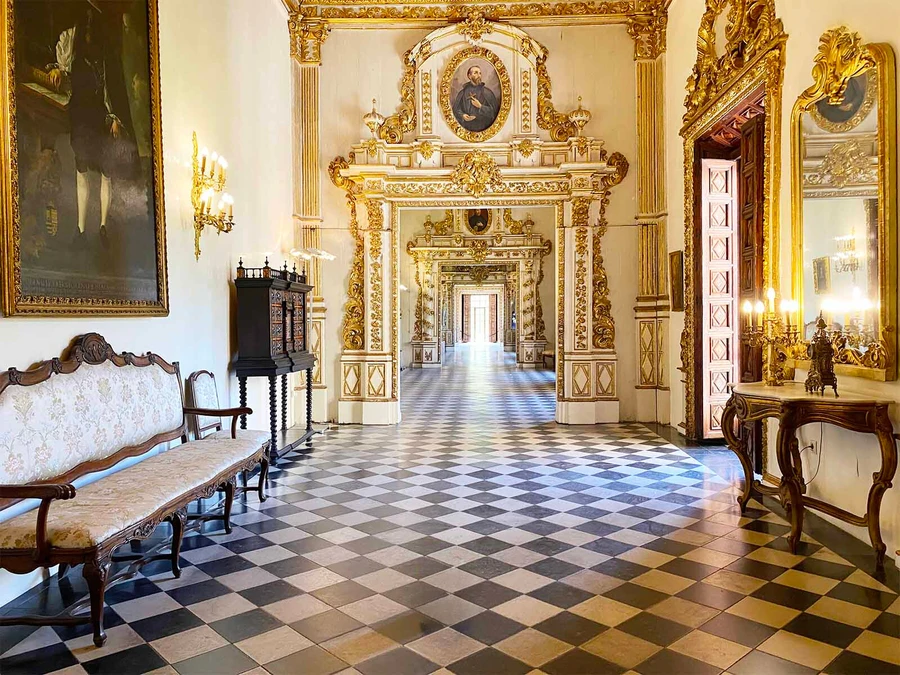
It consists of five rooms, each more impressive than the last: Heraldry, Ornamental, Glorification of Saint Francis Borgia, Holy Family, and Heaven and Earth.
The ceilings of these rooms are decorated with magnificent paintings by Gaspar de la Huerta, considered the last great representative of the Valencian school of Spanish Baroque.
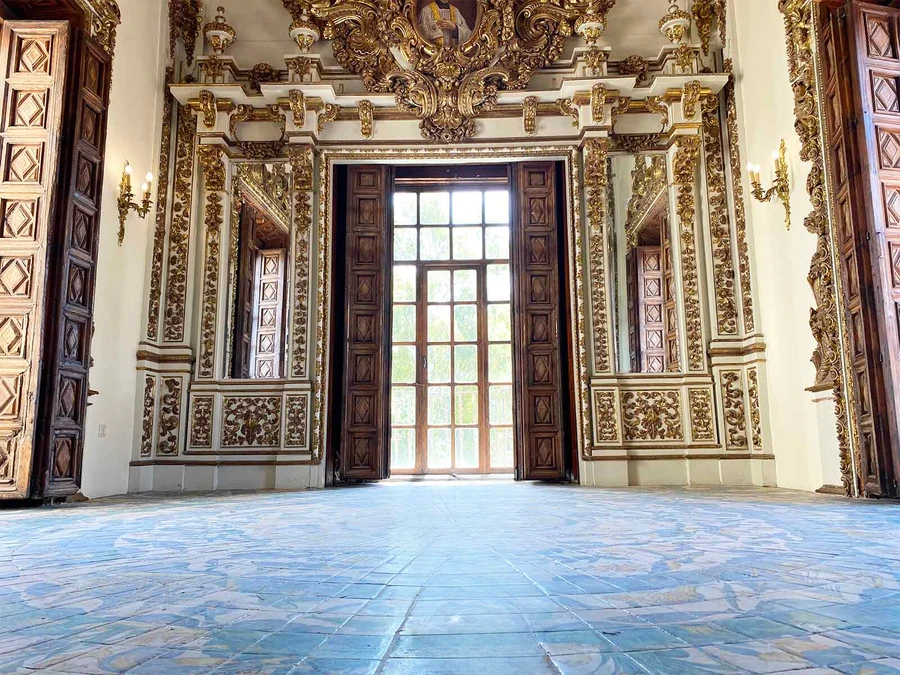
In the last room, do not forget to look down: the floor is made up of 1,500 pieces of 18th-century Manises ceramic, forming intricate designs representing the four elements.
The Terrace
The route concludes on the terrace, where you can admire the exterior decoration of the Golden Gallery, with its delicate flowers and windows decorated with blue ceramics.
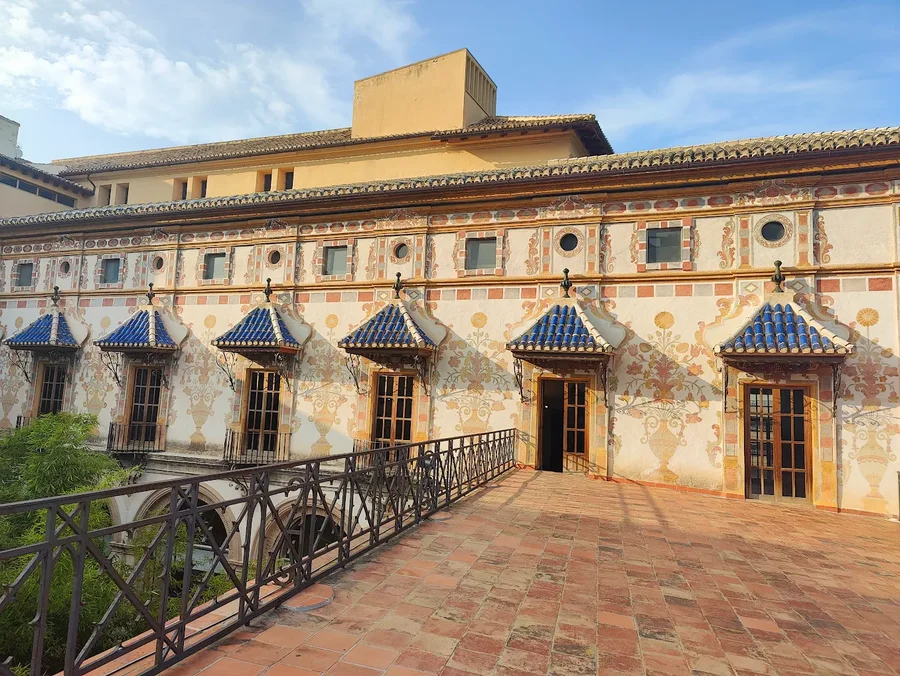
From here you can also see the cistern that Carlos de Borja ordered to be built in the 16th century at the centre of the courtyard. Centuries later, it unexpectedly served as an air-raid shelter during the Civil War.
Ticket Prices for the Ducal Palace of the Borgia
The Ducal Palace of the Borgia in Gandia offers different rates depending on the type of visitor:
-
General admission: EUR8.
-
Reduced admission: EUR7.
-
Children aged 6-17 and people with disabilities: EUR4.
Important note: Prices and opening hours may vary depending on the type of visit you choose. We recommend checking the palace’s official website for the most up-to-date information.
Beyond the Visit
The experience at the Ducal Palace of the Borgia does not end when you walk out the door. I recommend spending some time exploring the surrounding area.
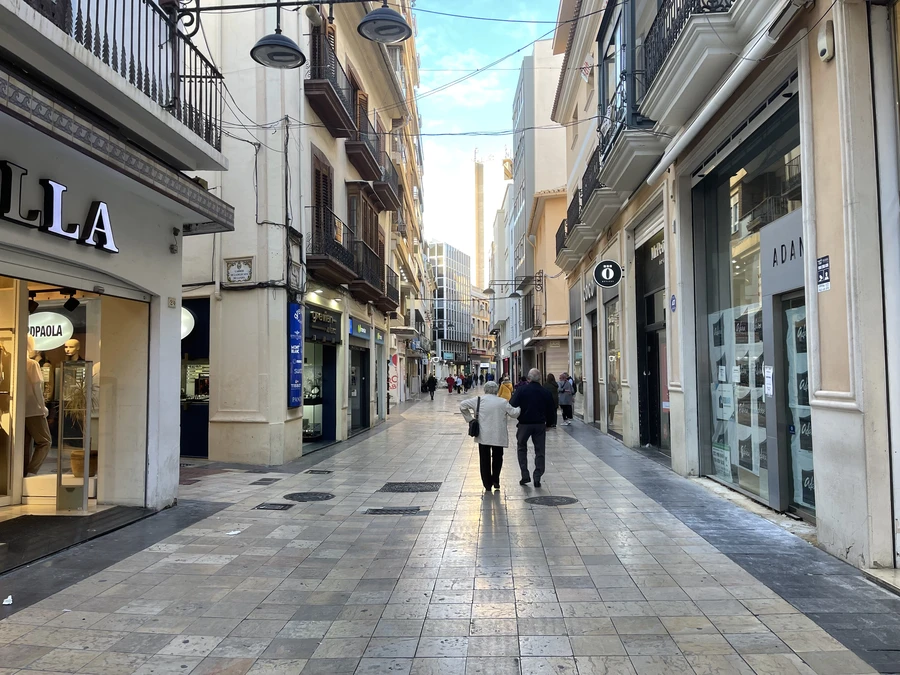
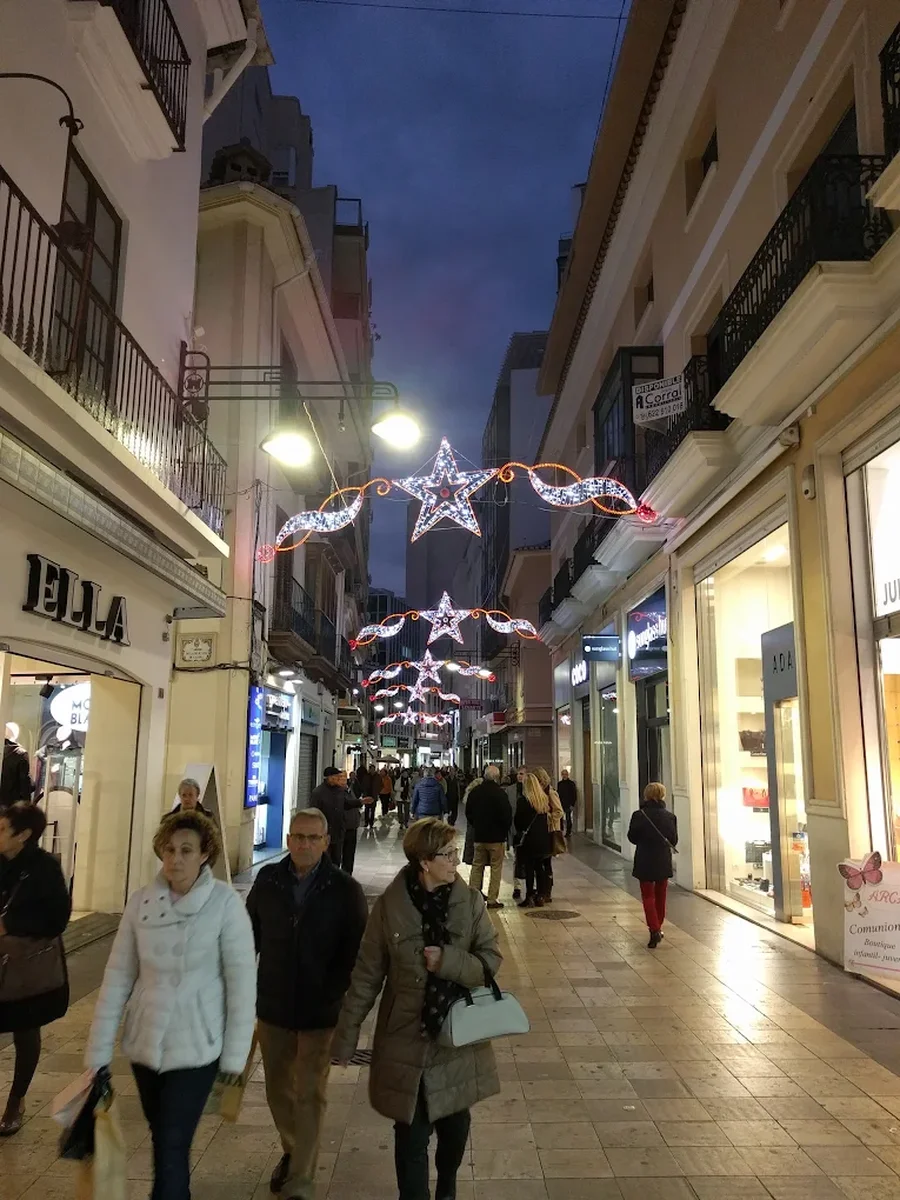
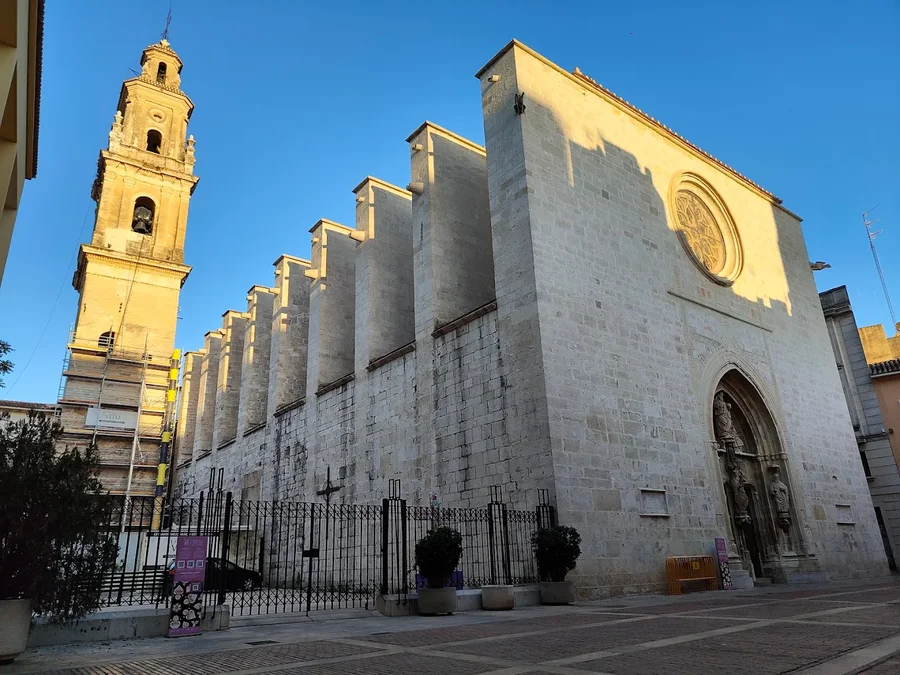
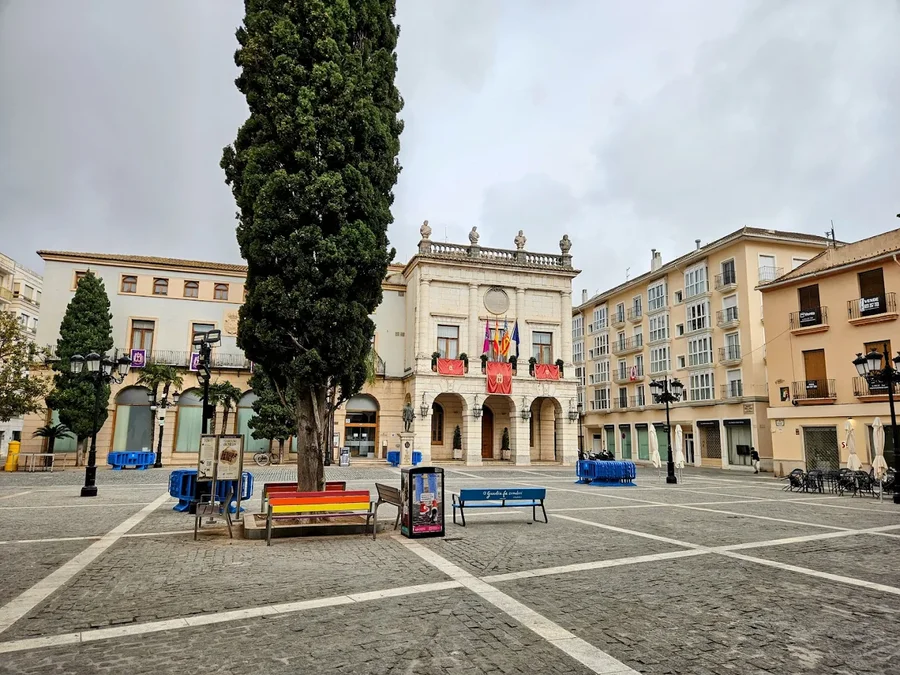
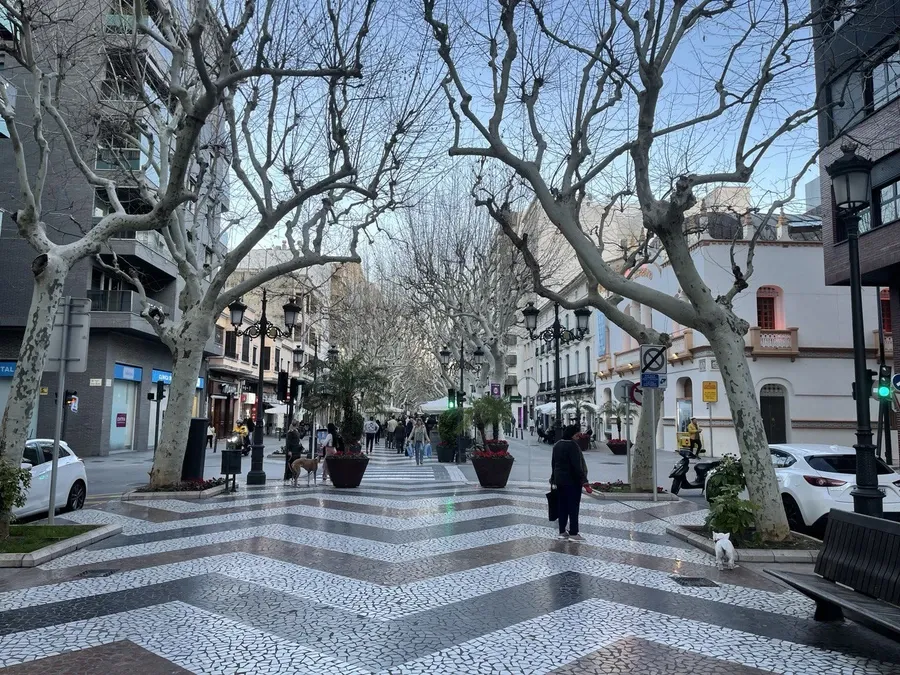
The palace is also located right in Gandia’s historic centre. Take the opportunity to walk through the surrounding streets, visit the Collegiate Church of Saint Mary, another building connected with the Borgia family, or explore the many shops and restaurants in the area.
If the history of the Borgia family has sparked your curiosity, I recommend continuing your Borgia route through other places in the Valencian Community, such as Xativa, the birthplace of Alexander VI, or the city of Valencia, where you will find more traces of this fascinating family.
How to Get to the Ducal Palace of the Borgia
Getting to the Ducal Palace of the Borgia is easier than you might think. Here is how you can do it from different points:
By Car
If you come in your own vehicle, the palace is located right in the centre of Gandia. Enter this into your GPS: Calle Duque Alfonso el Viejo, 1, 46701 Gandia, Valencia. There are several public car parks nearby, the closest being Plaza del Prado, just 5 minutes away on foot.
By Train
If you prefer public transport, you can arrive by train from Valencia. Commuter trains on line C-1 depart regularly from Valencia’s Estacion del Norte and take around one hour to reach Gandia.
Once at Gandia station, the palace is about 15 minutes away on foot or 5 minutes by taxi.
From Gandia Beach
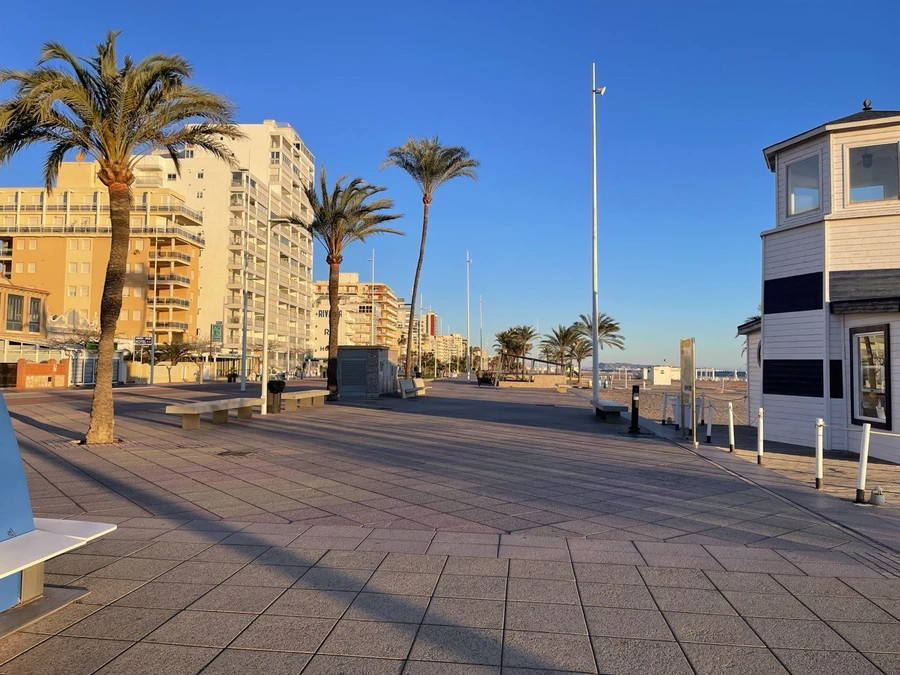
If you are already enjoying the sun and sand at Gandia Beach, no problem. There are urban buses connecting the beach with the city centre approximately every 20 minutes. The journey takes around 20 minutes and leaves you very close to the palace.

Once in the historic centre, you cannot really miss it. The Ducal Palace is one of the most emblematic buildings and is well signposted. Also, any local will be happy to point you in the right direction.
To Conclude
The Ducal Palace of the Borgia is much more than a simple historic building. So next time you visit Gandia, do not stay only on the beach, wonderful as it is.
Set aside a few hours to immerse yourself in history at the Ducal Palace of the Borgia. I assure you that you will leave with the feeling of having travelled through time and with a desire to learn more about this fascinating family and its legacy.
Have you already visited the Ducal Palace of the Borgia? What impressed you the most? Do you have an anecdote or tip you would like to share with other visitors? Leave your comments below. I love reading your experiences and answering your questions.